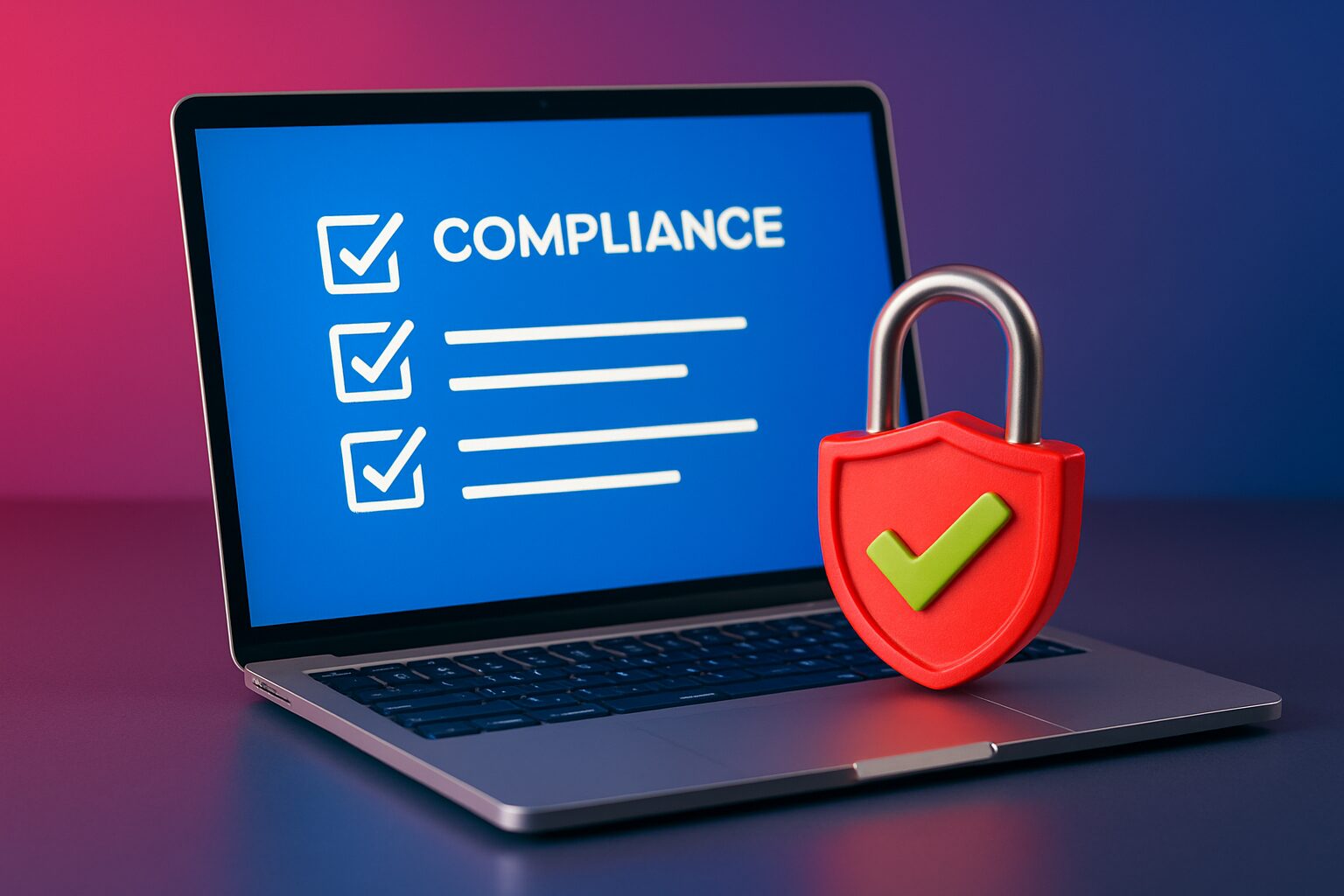
Online meeting compliance is no longer a niche concern reserved for regulators and large enterprises; it is a daily operational requirement for any team that handles sensitive data, hosts clients, or collaborates across borders. If a single screen share can reveal protected health information, personally identifiable information, or confidential legal documents, how do you ensure every virtual interaction is safe, lawful, and audit-ready? In this guide, you will find a practical checklist, actionable guidance, and structured workflows that bring structure and confidence to your digital meetings while maintaining momentum. And because technology should simplify rather than complicate your work, we will show how AONMeetings, a secure, browser-based platform powered by WebRTC (Web Real-Time Communication), helps you operationalize compliance without friction or downloads, and with integrated webinar hosting options.
What Is Online Meeting Compliance and Why It Matters
At its core, online meeting compliance means your virtual meeting processes, tools, and behaviors consistently align with applicable laws, industry standards, internal policies, and contractual commitments. That alignment spans data collection, processing, storage, transmission, disclosure, access control, and recordkeeping responsibilities, and it must hold up under scrutiny from auditors, courts, clients, and the public. For healthcare, regulations like HIPAA (Health Insurance Portability and Accountability Act) define safeguards for protected health information, while education stakeholders face FERPA (Family Educational Rights and Privacy Act) obligations for student records and COPPA (Children’s Online Privacy Protection Act) constraints for minors’ data in classrooms. Legal and corporate teams balance confidentiality duties, discovery rules, and cross-border data transfer constraints under GDPR (General Data Protection Regulation), CCPA (California Consumer Privacy Act), and similar privacy frameworks. The stakes are tangible: industry analyses regularly cite multimillion-dollar average breach costs and heavy fines for noncompliance, and reputational damage can linger long after an incident ends, making prevention and readiness the smart business default.
Practically, online meeting compliance is built on five pillars: identity assurance, least-privilege access, secure content handling, transparent consent and notice, and evidence-grade logging that proves what happened and why. When you adopt a platform like AONMeetings that is built for HD (High Definition) video and audio quality via WebRTC (Web Real-Time Communication), advanced encryption, and HIPAA (Health Insurance Portability and Accountability Act) compliance controls, you reduce both configuration effort and residual risk. Moreover, compliance should not slow down collaboration. Features such as browser-based access with no downloads, AI (Artificial Intelligence)-powered summaries, and integrated webinar hosting with registration and paid webinar support provide speed for users while preserving controls for administrators. Would you rather fight pop-ups and plug-in updates during a high-stakes board briefing, or click a secure Uniform Resource Locator (URL) and step into a meeting that is policy-aligned by default? With a compliance-first architecture, your teams can do the right thing without extra steps.
Think of compliance like a seatbelt system in a modern car. You do not bolt the seatbelt on before each trip; it is built in. Your platform should be that integrated safety system for meetings.
Regulatory Landscape by Sector: What You Must Cover
Although principles like data minimization and access control are universal, the exact obligations differ by sector and geography, so mapping your meetings to the right frameworks is essential. Healthcare organizations dealing with telehealth and multi-disciplinary case conferences must implement administrative, physical, and technical safeguards consistent with HIPAA (Health Insurance Portability and Accountability Act), including encryption, access controls, audit trails, and business associate agreements when appropriate. Educational institutions that deliver virtual classes, parent-teacher conferences, or student services must align with FERPA (Family Educational Rights and Privacy Act) for education records and COPPA (Children’s Online Privacy Protection Act) when children under 13 participate in services requiring data collection, consent, and parental notice. Law firms and corporate legal departments juggle confidentiality, privilege, and eDiscovery readiness while meeting duties under GDPR (General Data Protection Regulation), which can impose fines of up to 20 million Euros or 4 percent of global revenue for severe infringements, and under CCPA (California Consumer Privacy Act), which drives transparency and consumer rights for California residents. Finance and retail settings often layer PCI DSS (Payment Card Industry Data Security Standard) constraints for payment card data protection, even if payments are not the meeting’s primary purpose, because screen shares and chat logs can inadvertently capture sensitive cardholder data.
Watch This Helpful Video
To help you better understand online meeting compliance, we’ve included this informative video from MANIFESTED PUBLISHERS. It provides valuable insights and visual demonstrations that complement the written content.
To manage this complexity without drowning in checklists, many organizations create a standard control baseline aligned to SOC 2 (System and Organization Controls 2) and ISO/IEC 27001 (International Organization for Standardization and International Electrotechnical Commission 27001 Information Security Management) while adding sector-specific controls as needed. AONMeetings supports that approach with features like enforced Multi-Factor Authentication (MFA) [Multi-Factor Authentication], Single Sign-On (SSO) [Single Sign-On] via identity providers, granular Role-Based Access Control (RBAC) [Role-Based Access Control], and data handling configurations that align with HIPAA (Health Insurance Portability and Accountability Act) and GDPR (General Data Protection Regulation) expectations. Because the platform is browser-based, you avoid risky plug-ins, and because it uses strong Transport Layer Security (TLS) [Transport Layer Security] and optional End-to-End Encryption (E2EE) [End-to-End Encryption], you keep content protected in transit and, when enabled, even from the service provider. Meanwhile, AI (Artificial Intelligence)-powered summaries and live streaming adhere to the same guardrails, giving you modern collaboration without sacrificing your audit defense.
| Industry | Primary Regulations | Key Risks in Meetings | Controls to Prioritize | How AONMeetings Helps |
|---|---|---|---|---|
| Healthcare | HIPAA (Health Insurance Portability and Accountability Act) | Exposure of Protected Health Information (PHI) [Protected Health Information] in chat, video, or recordings | E2EE (End-to-End Encryption), access controls, audit logs, consent notice | HIPAA-ready settings, encrypted media via WebRTC (Web Real-Time Communication), granular host controls |
| Education | FERPA (Family Educational Rights and Privacy Act), COPPA (Children’s Online Privacy Protection Act) | Student record disclosure, underage data collection without parental consent | Waiting rooms, recording consent prompts, restricted chat/file share | Classroom templates, role permissions, clear consent banners |
| Legal | GDPR (General Data Protection Regulation), confidentiality and privilege duties | Unauthorized access to case files, discovery mishandling | RBAC (Role-Based Access Control), watermarking, retention controls | Invite-only links, lock meeting, recording retention and legal hold |
| Corporate | GDPR (General Data Protection Regulation), CCPA (California Consumer Privacy Act), SOC 2 (System and Organization Controls 2) | PII (Personally Identifiable Information) leakage, vendor risk | MFA (Multi-Factor Authentication), SSO (Single Sign-On), DLP (Data Loss Prevention) [Data Loss Prevention] | Identity integrations, restricted downloads, exportable audit reports |
| Financial Services | PCI DSS (Payment Card Industry Data Security Standard), GDPR (General Data Protection Regulation) | Card data capture via screen share or chat | Screen share restrictions, masking, logging | Host-level controls, policy-based feature toggles |
Your Online Meeting Compliance Checklist: Before, During, After
Compliance lives in the details, so a structured workflow before, during, and after each meeting keeps your organization consistent. Before a meeting, clarify the lawful basis for processing under GDPR (General Data Protection Regulation) where applicable, and determine whether protected health information or education records will be discussed, which triggers HIPAA (Health Insurance Portability and Accountability Act) or FERPA (Family Educational Rights and Privacy Act) considerations. Configure waiting rooms, meeting passwords, or SSO (Single Sign-On)-only entry to establish identity assurance and least-privilege access, and disable nonessential features like file transfer, private chat, or screen control unless explicitly needed. Draft a short consent notice for recordings, AI (Artificial Intelligence) summaries, and live streaming, and share any data processing terms in advance. Finally, designate a compliance lead who can step in if the meeting veers into a regulated topic unexpectedly, such as personally identifiable information or payment card data exposure during a demo, to pause or adjust controls on the spot.
During the meeting, the host should admit only known attendees from the waiting room, verify names against the invite, and use lock meeting once the session begins to prevent drive-by intrusions. When recording, announce consent clearly at the start and enable on-screen prompts; consider watermarking and disable local downloads to retain stewardship. For content hygiene, share only the specific application window necessary rather than the entire desktop, and turn on background blur to limit incidental exposure to physical documents or whiteboards visible to the camera. After the meeting, assign action items and tag sensitive follow-ups, store recordings in an approved repository with retention timers set according to your schedule, and export audit logs as evidence for SOC 2 (System and Organization Controls 2) and ISO/IEC 27001 (International Organization for Standardization and International Electrotechnical Commission 27001 Information Security Management) controls. With AONMeetings, these steps are accelerated by policy templates, AI (Artificial Intelligence)-powered summaries for immediate minutes, and one-click live streaming options that carry the same privacy parameters, ensuring compliance does not add friction to your project timelines.
- Before: classify sensitivity, set entry controls (waiting room, MFA [Multi-Factor Authentication], SSO [Single Sign-On]), share consent language, and restrict features.
- During: verify attendees, lock meeting, announce and capture recording consent, share minimal content, monitor chat for sensitive data.
- After: store artifacts in approved locations, apply retention and legal hold, review AI (Artificial Intelligence) summaries for accuracy, export audit logs.
| Checklist Item | Owner | When | Status | Evidence to Keep |
|---|---|---|---|---|
| Meeting sensitivity classification | Host | Before | Open | Agenda, invite notes |
| Identity controls set (MFA [Multi-Factor Authentication], SSO [Single Sign-On]) | IT Admin | Before | Open | Screenshot of policy settings |
| Consent notice distributed | Host | Before | Open | Email copy, chat message |
| Recording consent captured | Host | During | Open | Recording file, chat acknowledgments |
| Audit logs exported | Compliance | After | Open | CSV export, ticket reference |
| Retention policy applied | Records Manager | After | Open | Policy ID, timestamp |
Security and Privacy Controls That Stand Up to Audits
Auditors do not evaluate slogans; they evaluate evidence. That is why defensible online meeting compliance demands controls you can demonstrate with configurations, logs, and repeatable procedures. Start with encryption: media, signaling, and content should be protected in transit using modern Transport Layer Security (TLS) [Transport Layer Security] with strong cipher suites, and optional End-to-End Encryption (E2EE) [End-to-End Encryption] should be available for sessions that require highest confidentiality. At rest, recordings and transcripts should be encrypted with algorithms such as Advanced Encryption Standard 256-bit and stored in geographic regions aligned with your data residency strategy. Identity and access are next: require Multi-Factor Authentication (MFA) [Multi-Factor Authentication], enforce Single Sign-On (SSO) [Single Sign-On], and grant granular Role-Based Access Control (RBAC) [Role-Based Access Control] so only the right people can schedule, host, record, or export data. Layer Data Loss Prevention (DLP) [Data Loss Prevention] by disabling or restricting risky features by policy, such as external file sharing during high-sensitivity meetings, and enable watermarking to discourage redistribution of captured content.
Equally important are operational guardrails that reduce human error and provide audit trails. Waiting rooms, lobby announcements, meeting locks, and host-controlled admissions keep unknown participants out, while lobby chat guidance can remind latecomers about the consent policy before they are admitted. Logging should capture timestamps for join and leave events, recording start and stop, feature toggles, and any host interventions like muting or screen share revocation, which together form evidence for SOC 2 (System and Organization Controls 2) and ISO/IEC 27001 (International Organization for Standardization and International Electrotechnical Commission 27001 Information Security Management) controls. AONMeetings centralizes these safeguards: browser-based sessions reduce the attack surface inherent in unmanaged plug-ins, WebRTC (Web Real-Time Communication) delivers high-quality encrypted media without extra software, and HIPAA (Health Insurance Portability and Accountability Act)-aligned features simplify healthcare workflows. For organizations running public meetings, AI (Artificial Intelligence)-generated summaries can be reviewed and published with the same retention and redaction rules, ensuring transparency without oversharing personally identifiable information. When auditors ask, you can show policy, config snapshots, logs, and sample artifacts, transforming a stressful inspection into a straightforward walkthrough.
- Use application-only screen share to minimize accidental data leaks.
- Set default meetings to private, requiring invite link and SSO (Single Sign-On) authentication.
- Enable recording consent prompts and visible indicators for all participants.
- Restrict external participants to view-only when appropriate, with no local recording.
- Review AI (Artificial Intelligence) summaries for sensitive terms before distribution.
Recording, Retention, and Data Governance Without the Headaches
Recordings, transcripts, chat logs, and AI (Artificial Intelligence) summaries are invaluable for continuity and accountability, yet they introduce governance obligations many teams underestimate. Before hitting record, establish a lawful basis for processing under GDPR (General Data Protection Regulation) where applicable, and capture explicit or implied consent consistent with your jurisdiction and policy. Display a visible recording indicator and read a brief consent statement, especially in environments subject to HIPAA (Health Insurance Portability and Accountability Act) or FERPA (Family Educational Rights and Privacy Act), and consider a pre-meeting consent survey for larger webinars. For storage, define a retention schedule by content type, sensitivity, and legal hold needs, then automate it; for example, keep internal training recordings for 12 months, project decision meetings for 24 months, and patient or student sessions per statutory guidance. Use metadata like topic, owner, and sensitivity classification to drive the retention policy, and tag content that contains PHI (Protected Health Information) or PII (Personally Identifiable Information) for extra restrictions such as no downloads and limited sharing scopes. Because geography matters, align storage location with your data residency commitments and cross-border transfer agreements.
Redaction and minimization complete the picture. If AI (Artificial Intelligence) summaries or transcripts identify sensitive terms like Social Security numbers, student IDs, or medical record numbers, you should apply automated redaction rules or manual review before external distribution. AONMeetings helps with consent banners, recording privacy settings, and retention policies you can set once and apply meeting by meeting, ensuring consistency without recoding your workflows. Administrators can place a legal hold on specific recordings for litigation or audits, export chain-of-custody logs, and apply watermarking with participant email addresses to discourage leaks. As a result, your records program becomes proactive rather than reactive, and your teams do not have to wonder which files to keep or purge after every call. With transparency built into the interface, even occasional hosts understand the rules because the platform guides them at the moment of decision, reducing the training burden and improving compliance outcomes.
| Artifact | Typical Retention | Risks if Kept Too Long | Risks if Deleted Too Soon | Recommended Control |
|---|---|---|---|---|
| Meeting recordings | 12 to 24 months, unless legal hold | Breach blast radius, discovery scope expansion | Loss of institutional memory, audit gaps | Automated timers, legal hold overrides |
| Transcripts | 6 to 12 months | PII (Personally Identifiable Information) exposure | Accessibility and knowledge loss | Redaction rules, access-limited libraries |
| Chat logs | 3 to 12 months | Unstructured sensitive data leakage | Lost context for decisions | Export to archive, DLP (Data Loss Prevention) rules |
| AI (Artificial Intelligence) summaries | 12 months | Inference of sensitive patterns | Reduced searchability and recall | Policy-based storage, redaction keywords |
Real-World Examples: Healthcare, Education, Legal, and Corporate Teams
Healthcare clinic: A multi-site behavioral health provider struggled with inconsistent telehealth documentation and varying platform settings that created HIPAA (Health Insurance Portability and Accountability Act) anxiety for clinicians. By standardizing on AONMeetings, the organization used SSO (Single Sign-On) for all staff, enforced waiting rooms for patient sessions, and enabled automatic recording consent prompts when therapy supervisors joined for training purposes. AI (Artificial Intelligence)-driven summaries fed into clinical note templates, while sensitive recordings were auto-tagged as PHI (Protected Health Information) and retained per policy. Over six months, missed-consent incidents dropped to zero, and audit readiness improved with exportable logs that satisfied both internal review and payer audits. The result was faster wrap-up time after sessions, less manual documentation, and a more consistent privacy posture that built patient trust.
Education district: A K-12 district expanded remote learning but faced complaints about accidental student exposure in class recordings shared to parents. Implementing AONMeetings, the district enforced role-based settings so teachers could record but only publish to a restricted portal, applied automatic blurring for student video mosaics, and required parental consent for under-13 students per COPPA (Children’s Online Privacy Protection Act). FERPA (Family Educational Rights and Privacy Act) concerns were addressed with limited transcript access and redaction of student names in AI (Artificial Intelligence) summaries before sharing. Within one quarter, the district reported a 60 percent decline in privacy incidents and higher satisfaction from families who received timely, accessible content without overexposure risk. Teachers celebrated the browser-based experience because Chromebooks required no add-ons, enabling quick start times and fewer technical support tickets during class.
Law firm: A boutique litigation firm needed a defensible remote deposition workflow that safeguarded exhibits and maintained privilege boundaries. With AONMeetings, hosts restricted screen share to a single application, enabled watermarking with participant email addresses on all shared exhibits, and locked meetings once the court reporter joined. Recordings were stored in a discovery-ready repository with retention aligned to case timelines, and transcripts underwent AI (Artificial Intelligence)-assisted review for sensitive names prior to production. Identity assurance via MFA (Multi-Factor Authentication) [Multi-Factor Authentication] and SSO (Single Sign-On) prevented unauthorized access through forwarded links. The firm achieved smoother depositions with fewer objections related to process, while maintaining a clean audit trail that clients and courts appreciated, and billed fewer hours to technical issues thanks to the browser-based flow.
Corporate product team: A global manufacturer ran biweekly design reviews with external vendors, where confidential drawings were sometimes captured by participants. After adopting AONMeetings, the team used external guest controls with view-only screen share, disabled local recording for non-employees, and applied 90-day retention for meeting summaries. DLP (Data Loss Prevention) policies automatically flagged and blocked file sharing that included certain part numbers, and WebRTC (Web Real-Time Communication) delivered low-latency HD (High Definition) streams that made remote collaboration feel in person without requiring plug-ins. Over a year, the company measured a 40 percent reduction in confidentiality incidents and accelerated vendor onboarding because no downloads were necessary, reducing security reviews and administrative overhead.
Implementation Guide: Rollout Steps, Training, and Metrics That Matter
Successful adoption begins with clarity and momentum. Start by defining your compliance baseline aligned to SOC 2 (System and Organization Controls 2) and ISO/IEC 27001 (International Organization for Standardization and International Electrotechnical Commission 27001 Information Security Management), then translate those controls into meeting policies and AONMeetings configurations. Pilot with a cross-functional group from healthcare, education, legal, and corporate teams to capture diverse edge cases, and document decisions with screenshots and short internal videos. Train hosts with role-specific micro-lessons on admitting participants, announcing consent, and using application-only share. Provide quick-reference cards in meeting invites so controls are one click away at the moment of need. Meanwhile, partner with your legal and privacy teams to finalize Data Processing Agreements (DPA) [Data Processing Agreement] and, if required, conduct a Data Protection Impact Assessment (DPIA) [Data Protection Impact Assessment] that documents risk mitigations like encryption, access control, and retention schedules. Having these artifacts in place becomes your shield when external auditors or customers evaluate your program.
Once live, manage by metrics. Track broken-join rates, average time to meeting start, percentage of meetings with recording consent captured, and the number of incidents involving PHI (Protected Health Information) or PII (Personally Identifiable Information). You can also measure adoption of MFA (Multi-Factor Authentication) [Multi-Factor Authentication], usage of E2EE (End-to-End Encryption) [End-to-End Encryption] for high-sensitivity sessions, and adherence to retention timers. AONMeetings provides dashboards and exportable reports to monitor these indicators, while AI (Artificial Intelligence) summaries speed up post-meeting documentation so teams can focus on action items. Because the platform is browser-based, support tickets related to installs and plug-ins typically decline, lowering your total cost of ownership and freeing your information technology team for higher-value projects. With a steady cadence of review, you will iterate toward fewer incidents, faster workflows, and stronger confidence across your organization.
| Phase | Key Actions | Artifacts | Success Metrics |
|---|---|---|---|
| Plan | Define policies, map regulations, select defaults | Policy doc, DPIA (Data Protection Impact Assessment) | Stakeholder sign-off, risk register reductions |
| Pilot | Train champions, test edge cases, refine settings | Training deck, configuration checklist | Under 5 percent join issues, positive user ratings |
| Launch | Roll out to all teams, publish quick guides | Intranet page, video tutorials | 90 percent meetings with consent logged |
| Operate | Monitor logs, handle exceptions, audit reviews | Monthly reports, audit evidence pack | Incident rate under target threshold |
Why AONMeetings Fits a Compliance-First Strategy
Technology should amplify your governance, not complicate it. AONMeetings brings together HD (High Definition) video and audio quality powered by WebRTC (Web Real-Time Communication), browser-based access with no downloads, integrated webinar hosting with registration options and support for paid webinars, and a security foundation that includes HIPAA (Health Insurance Portability and Accountability Act) alignment and advanced encryption for sessions, recordings, and metadata. For information technology administrators, policy templates translate legal and compliance language into concrete controls across waiting rooms, recording consent, screen share scope, watermarking, and external participant restrictions. For meeting hosts and everyday users, the interface surfaces the right choices at the right time, such as announcing consent or restricting downloads when a sensitive topic emerges. Moreover, AI (Artificial Intelligence)-powered summaries and live streaming inherit the same privacy settings, so your teams do not need parallel workflows for modern features.
Equally compelling is the economics and simplicity of deployment. With no plug-ins to install and integrated webinar hosting (including paid webinar support), AONMeetings lowers barriers for guests, clients, and public attendees while holding firm to identity, access, and encryption standards that satisfy auditors. Because sessions run in the browser, you avoid conflicts with endpoint security tools and reduce the attack surface associated with unmanaged add-ons. Logs and reports export cleanly to support SOC 2 (System and Organization Controls 2) and ISO/IEC 27001 (International Organization for Standardization and International Electrotechnical Commission 27001 Information Security Management) evidence, while retention timers and legal hold features ensure recordings and transcripts are handled consistently. This design gives you a credible, repeatable path to online meeting compliance without asking your users to become policy experts, achieving that rare balance of security, speed, and user delight.
| Capability | AONMeetings | Typical Legacy Platform |
|---|---|---|
| Access model | Browser-based access, no downloads required | Requires client installs or plug-ins for full features |
| Video/Audio quality | HD (High Definition) via WebRTC (Web Real-Time Communication) | Variable quality, dependent on client version |
| Webinars | Integrated webinar hosting with registration options; support for paid webinars | Separate webinar add-on fees |
| Security | Advanced encryption, E2EE (End-to-End Encryption) options, HIPAA (Health Insurance Portability and Accountability Act) alignment | Basic encryption, limited healthcare controls |
| Identity | MFA (Multi-Factor Authentication), SSO (Single Sign-On), RBAC (Role-Based Access Control) | Partial SSO (Single Sign-On), inconsistent roles |
| Compliance tooling | Consent prompts, retention timers, audit exports | Manual workarounds, scattered logs |
| AI (Artificial Intelligence) features | Summaries and live streaming with inherited privacy | Third-party add-ons with separate policies |
Expert Tips and Common Pitfalls to Avoid
Even strong programs stumble on predictable gaps, so it helps to learn from other teams’ missteps. First, do not assume a blue “recording” light equals valid consent, because consent requirements differ by jurisdiction and audience; instead, pair visible indicators with a spoken statement and a brief chat note. Second, lock down screen share defaults to application-only rather than entire desktop, particularly in environments with sensitive dashboards or messaging apps that can pop up unexpectedly. Third, avoid sprawling retention by establishing a short default and making longer retention an exception tied to legal or business justification; in practice, most organizations reduce exposure and discovery scope by purging redundant media promptly. Fourth, treat AI (Artificial Intelligence) summaries as accelerators, not gospel, by reviewing for accuracy and sensitive content before publishing. Fifth, rehearse incident response including how to stop a meeting, notify participants, and preserve logs should an exposure occur, so you are not improvising under stress.
Additionally, calibrate controls to the meeting’s purpose rather than applying the same heavy settings everywhere, which frustrates users and invites shadow information technology. AONMeetings supports this nuance with policy-based profiles: a telehealth session can require waiting rooms, consent banners, and strict retention, while an internal stand-up uses lighter defaults to keep friction low. Provide simple one-page guides in your invites with steps and icons, and include contact details for the meeting’s compliance lead if questions arise. Finally, measure and celebrate progress, such as a month with 100 percent recording consent captured or a quarter with zero uninvited attendees admitted from the lobby. Culture shifts when compliance feels like a shared professional standard rather than a checklist that only auditors care about, and the right tooling makes that shift faster and more durable.
Diagram description: A circular flow with five segments labeled Plan, Secure, Conduct, Store, and Review. Arrows show progression from classifying sensitivity and setting identity controls, to running the meeting with consent and minimal sharing, to storing artifacts with retention timers, and finally reviewing logs and metrics for continuous improvement.
Frequently Asked Questions About Online Meeting Compliance
Do we need End-to-End Encryption (E2EE) [End-to-End Encryption] for every meeting? Not necessarily. For internal stand-ups and low-sensitivity sessions, strong Transport Layer Security (TLS) [Transport Layer Security] in transit and encryption at rest may suffice, while high-sensitivity discussions like patient care conferences or legal strategy calls may warrant E2EE (End-to-End Encryption). What counts as valid consent for recording? Generally, visible indicators and verbal notice work well, and some jurisdictions require affirmative acknowledgment in chat or a consent form; always align to your counsel’s guidance. Can AI (Artificial Intelligence) summaries create new privacy risks? They can if handled casually; mitigate by inheriting meeting privacy settings, redacting sensitive terms, and limiting distribution to intended audiences. How do we handle guests without managed accounts? Use waiting rooms, identity verification, and restricted capabilities for external attendees, and disable local recording or file transfer by policy. What about accessibility? Provide transcripts and captions, review for sensitive terms before publishing, and store them under the same retention controls as recordings.
Why browser-based matters: eliminating installs reduces support burden and shrinks the attack surface associated with unmanaged plug-ins, which is especially valuable for regulated industries and public meetings with diverse participants and devices. AONMeetings leverages WebRTC (Web Real-Time Communication) for reliable, encrypted media in the browser, scales easily for large audiences, and includes integrated webinar hosting and paid webinar support to meet event needs. Combined with MFA (Multi-Factor Authentication) [Multi-Factor Authentication], SSO (Single Sign-On), RBAC (Role-Based Access Control), and DLP (Data Loss Prevention) [Data Loss Prevention], the platform offers a coherent path to consistent, auditable outcomes. Ultimately, you get the double benefit of better user experience and stronger governance, which is rare in enterprise technology and particularly valuable when your reputation rides on every call.
Online meeting compliance, when implemented with intention and the right platform, becomes a natural extension of professional etiquette. Imagine a year from now, where every meeting starts on time, every consent is captured, every sensitive moment is shielded by design, and every audit request is answered with a few clicks. What would change for your team if secure, compliant, and human-friendly became the default setting for all your virtual interactions?
Ready to Take Your online meeting compliance to the Next Level?
At AONMeetings, we’re experts in online meeting compliance. We help businesses overcome businesses and organizations need a reliable, secure, and easy-to-use video conferencing tool that complies with industry regulations, offers advanced features, and works seamlessly for teams and clients without complex installations. through aonmeetings solves this by offering a fully browser-based platform with no extra fees for webinars and advanced security measures such as encryption and hipaa compliance, ensuring a seamless user experience and peace of mind for organizations of all sizes.. Ready to take the next step?