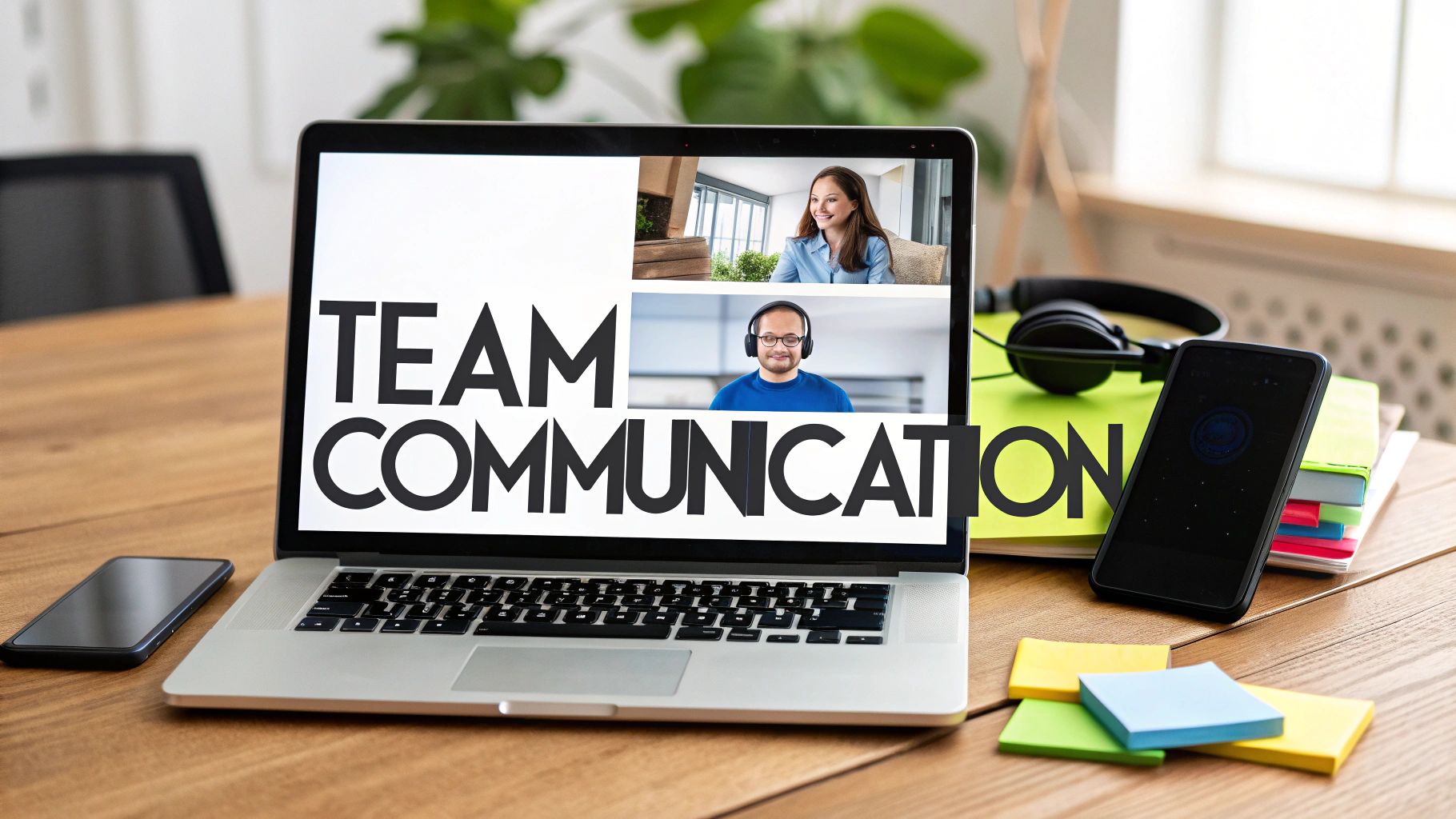
In today's fast-paced work environment, the difference between a high-performing team and a struggling one often comes down to a single factor: communication. Effective team communication strategies are not just about preventing misunderstandings; they are the bedrock of innovation, efficiency, and a positive company culture. From startups to global enterprises, teams that communicate with clarity, transparency, and empathy consistently outperform their peers.
However, with the rise of remote and hybrid work models, the old ways of connecting are no longer enough. Mastering communication requires a deliberate and strategic approach, moving beyond instinct to implement proven systems. For a deeper dive into practical advice, consider these 7 Expert Tips for Improving Workplace Communication as a foundational resource.
This article builds on that foundation by diving into 10 powerful, actionable team communication strategies designed for the modern workplace. We'll move beyond generic advice to provide you with specific frameworks, real-world examples, and practical steps. You will learn to implement daily stand-ups, structured feedback loops, and conflict resolution protocols immediately, transforming how your team collaborates and achieves its goals. Let's explore the methods that will unlock your team's full potential.
1. Daily Stand-ups
Originating from the Agile and Scrum frameworks, the daily stand-up is a short, time-boxed meeting held each day. The core purpose is to quickly synchronize the team by having each member briefly answer three key questions: What did I complete yesterday? What will I work on today? What obstacles are in my way? This simple structure makes it one of the most effective team communication strategies for maintaining alignment and momentum.

This practice is not just for software developers. Marketing teams use it to coordinate campaigns, and operations teams use it to manage daily workflows. For example, Buffer, a fully remote company, conducts asynchronous stand-ups in Slack to accommodate different time zones, proving the model's flexibility. Microsoft's development teams also utilize virtual stand-ups to connect global contributors.
How to Implement Daily Stand-ups
The key to a successful stand-up is discipline and focus. To get started, follow these actionable tips:
- Keep it brief: Strictly enforce a 15-minute time limit to ensure the meeting stays on track and respects everyone's time.
- Focus on blockers: The main goal is to identify and remove impediments. Deeper problem-solving should happen after the meeting with only the relevant people involved.
- Visualize progress: Use a physical or digital Kanban board (like Trello or Jira) so the team can see tasks moving forward.
- Consider going async: For remote or globally distributed teams, using dedicated tools for asynchronous updates can be highly effective. Learn more about using AonMeetings for daily stand-ups.
2. Structured Feedback Loops
A structured feedback loop is a systematic process for giving and receiving feedback at regular intervals and in multiple directions: downward, upward, and peer-to-peer. Popularized by frameworks like Kim Scott's "Radical Candor," this strategy moves beyond sporadic comments to create a culture of continuous improvement, ensuring issues are addressed constructively before they escalate. This makes it a cornerstone of effective team communication strategies.

This approach is highly effective for fostering growth and psychological safety. For example, Adobe replaced traditional annual reviews with its "Check-In" system, which encourages frequent, informal feedback between managers and employees. Similarly, Google integrates a robust peer feedback system into its performance reviews, providing a holistic view of an individual's contributions and collaborative skills.
How to Implement Structured Feedback Loops
Success depends on creating a safe, consistent, and well-defined process. To build an effective feedback culture, follow these actionable tips:
- Use a clear framework: Adopt a model like SBI (Situation, Behavior, Impact) to keep feedback specific, objective, and focused on actions rather than personality traits.
- Establish a regular cadence: Schedule dedicated time for feedback, whether it's in one-on-ones, team retrospectives, or quarterly reviews, to make it a normal part of the workflow.
- Create psychological safety: Leaders must model how to both give and receive feedback gracefully to encourage honest and open dialogue without fear of retribution. To gauge sentiment, implementing a staff engagement survey can provide valuable baseline data.
- Train your team: Don't assume everyone knows how to deliver constructive criticism. Provide training on effective communication and active listening skills.
3. Active Listening Protocols
Active listening is more than just hearing words; it is a communication strategy that requires fully concentrating, understanding, responding to, and remembering what is being said. Popularized by figures like Stephen Covey, this protocol transforms conversations from passive exchanges into active collaborations, ensuring messages are accurately received and team members feel valued. This focus on deep comprehension makes it one of the most fundamental team communication strategies for building trust and preventing misunderstandings.

This practice is critical in high-stakes environments. Mayo Clinic's patient care teams, for example, use active listening during multidisciplinary rounds to ensure precise information transfer and improve patient outcomes. Similarly, Southwest Airlines integrates active listening into its customer service training to de-escalate conflicts and foster loyalty. Patagonia’s leadership development also heavily emphasizes this skill to cultivate an inclusive and psychologically safe environment where every team member’s voice is genuinely heard.
How to Implement Active Listening Protocols
Cultivating an active listening culture requires conscious effort and consistent practice. To get started, introduce your team to these actionable techniques:
- Practice the 80/20 rule: Aim to listen 80% of the time and speak only 20%. This ratio ensures the speaker has ample space to fully express their thoughts.
- Use reflective statements: Paraphrase what you heard back to the speaker with phrases like, "So, what I'm hearing is…" This confirms your understanding and shows you're engaged.
- Avoid preparing a response: Focus entirely on what the other person is saying instead of formulating your reply while they are still talking.
- Ask open-ended questions: Encourage deeper conversation by asking questions that can't be answered with a simple "yes" or "no." This helps clarify points and uncover underlying issues.
4. Digital Communication Guidelines
In an age dominated by digital tools, establishing clear protocols for their use is a critical team communication strategy. Digital communication guidelines are a formal charter outlining the rules of engagement for platforms like email, instant messaging, and video conferencing. They set expectations for response times, define channel purposes, and ensure consistency, preventing miscommunication and digital fatigue.

This approach brings order to the potential chaos of constant notifications and varied communication styles. For instance, HubSpot created detailed Slack usage guidelines to clarify which channels are for urgent matters versus general discussion. Similarly, Automattic, the company behind WordPress.com, maintains a comprehensive communication charter to keep its globally distributed team aligned and productive without relying on a central office.
How to Implement Digital Communication Guidelines
Creating effective guidelines requires a thoughtful, team-centric approach. Here are specific steps to get started:
- Define urgency and response times: Clearly state which channels are for urgent issues (e.g., a direct Slack message) versus non-urgent updates (e.g., email), and set reasonable response time expectations for each.
- Create channel-specific purposes: In apps like Slack or Microsoft Teams, assign a clear purpose to each channel (e.g.,
#marketing-updates,#project-alpha-urgent) to keep conversations focused and relevant. - Establish "communication-free" hours: Protect your team's focus and work-life balance by setting designated times when non-emergency communication is discouraged.
- Use clear subject line conventions: For emails, implement a standardized format like "[ACTION REQUIRED] Q3 Report" or "[FYI] Team Lunch Update" to help recipients prioritize.
5. Cross-functional Collaboration Frameworks
Breaking down organizational silos is a major challenge, and cross-functional collaboration frameworks offer a structured solution. These frameworks provide a common language and shared processes for teams with different expertise to work together toward a unified goal. By establishing clear roles and objectives, these models are one of the most powerful team communication strategies for driving innovation and efficiency across an entire organization.
This approach is famously used in technology and beyond. Spotify’s "squads and tribes" model organizes small, autonomous, cross-functional teams around specific features. Similarly, Amazon's "two-pizza teams" are small enough to be fed by two pizzas, ensuring agility and direct ownership by including members from different departments like engineering, marketing, and product management. These structures foster direct communication and eliminate bureaucratic delays.
How to Implement Cross-functional Frameworks
Success with these frameworks relies on deliberate design and clear role definition. To foster better inter-departmental synergy, follow these actionable tips:
- Clarify roles with a RACI matrix: Define who is Responsible, Accountable, Consulted, and Informed for each task to eliminate confusion.
- Establish shared success metrics: Align teams by creating common KPIs that everyone contributes to, ensuring all departments are pulling in the same direction.
- Create cross-functional champions: Appoint liaisons within each team who are responsible for facilitating communication and collaboration with other departments.
- Use collaborative tools: Implement shared project management platforms (like Asana or Monday.com) to provide a single source of truth for progress and discussions. Learn more about how to collaborate effectively with diverse teams.
6. Conflict Resolution Protocols
Conflict is a natural byproduct of collaboration, but unmanaged disagreements can erode trust and productivity. Conflict resolution protocols are systematic frameworks for addressing disputes constructively, providing teams with clear steps to turn friction into a catalyst for growth. These protocols establish a predictable and fair process, making them one of the most crucial team communication strategies for maintaining psychological safety and team cohesion.
This structured approach prevents minor issues from escalating. For instance, Zappos uses a defined conflict resolution process within its holacracy model to address role-based tensions, while Google’s g2g (Googler-to-Googler) program offers peer-to-peer mediation to resolve workplace disputes. These systems ensure that disagreements are handled professionally and consistently, strengthening team relationships rather than damaging them.
How to Implement Conflict Resolution Protocols
Building a protocol is about creating a shared language and process for navigating difficult conversations. Here’s how to establish one for your team:
- Address conflicts early: Encourage team members to address issues as soon as they arise, before they escalate into larger problems.
- Focus on interests, not positions: Guide the conversation away from rigid demands ("I want this") and toward underlying needs ("I need this because…"). This approach, popularized by the book Getting to Yes, opens the door for creative solutions.
- Use 'I' statements: Train team members to express their perspectives without blaming others. For example, say "I feel frustrated when deadlines are missed" instead of "You always miss deadlines."
- Seek win-win solutions: The goal should be a mutually agreeable outcome, not for one person to "win." Brainstorm solutions together that meet everyone's core interests.
- Document and follow up: Once a resolution is reached, write it down to ensure clarity and commitment. Check in later to confirm the agreement is working as intended.
7. Transparent Communication Policies
Transparent communication policies are organizational-level strategies that prioritize openness, honesty, and widespread information sharing. These policies go beyond simple updates by establishing clear guidelines on what information is shared, how it is communicated, and why it matters. This approach builds a culture of trust and psychological safety, making it one of the most powerful team communication strategies for long-term engagement and alignment.
This model is exemplified by companies like GitLab, which operates with a "handbook-first" approach, making its internal processes and documentation public. Similarly, Buffer famously shares its revenue dashboard and salary formulas openly. These practices demystify leadership decisions and empower employees by giving them access to the same information as executives, fostering a sense of shared ownership and purpose.
How to Implement Transparent Communication Policies
Building a culture of transparency requires deliberate and consistent effort from leadership. To get started, follow these actionable tips:
- Start with leadership: Senior leaders must model transparency first by openly sharing business performance, challenges, and strategic decisions.
- Classify information: Determine what can be shared openly (e.g., project goals, financial dashboards) versus what must remain confidential (e.g., personal employee data).
- Provide context with data: When sharing numbers or data, explain what they mean and how they impact the team and the company's direction.
- Create safe spaces for questions: Establish channels like "Ask Me Anything" (AMA) sessions or open forums where employees can ask questions without fear of reprisal.
8. Meeting Optimization Strategies
Meetings are often criticized as time-wasters, but when optimized, they are powerful tools for decision-making and alignment. Meeting optimization involves systematic approaches to planning, running, and following up on meetings to ensure they are purposeful, efficient, and engaging. This strategy transforms meetings from drains on productivity into high-value touchpoints that propel work forward, making it a cornerstone of effective team communication strategies.
This concept has been championed by companies known for their efficiency. Amazon famously starts executive meetings with silent reading of a detailed six-page memo, ensuring everyone is deeply informed before discussion begins. Google defaults its calendar events to "speedy meetings," ending them 5 or 10 minutes early to give attendees a break. Similarly, Shopify implemented a "meeting-free Wednesdays" policy to create dedicated blocks of time for deep work, forcing teams to be more intentional about when they schedule discussions.
How to Implement Meeting Optimization Strategies
Making your meetings more effective requires a disciplined, structured approach. Start by adopting these clear, actionable habits:
- Enforce a 'no agenda, no meeting' rule: Every meeting invitation must include a clear agenda with specific goals. If there's no agenda, the meeting should be declined or rescheduled.
- Assign clear roles: Designate a facilitator to guide the conversation, a timekeeper to stay on schedule, and a note-taker to capture decisions and action items.
- End with clear action items: Reserve the last five minutes to summarize decisions and assign action items with clear owners and deadlines. This ensures accountability and follow-through.
- Use a "parking lot": Create a space to note important but off-topic ideas that arise. This keeps the meeting focused while ensuring valuable thoughts aren't lost, and they can be addressed later.
9. Cultural Sensitivity and Inclusion Practices
In an increasingly globalized workforce, effective team communication strategies must extend beyond simple clarity to embrace cultural diversity. Cultural sensitivity and inclusion practices involve actively acknowledging, respecting, and leveraging the different backgrounds, norms, and perspectives within a team. This approach ensures every member feels valued and psychologically safe, fostering an environment where all voices are heard and can contribute fully.
This practice is essential for any multinational or diverse team. For example, Salesforce champions its "Ohana" culture, which emphasizes equality and belonging through employee resource groups and inclusive leadership training. Similarly, Unilever's global teams undergo cross-cultural training to improve collaboration on international projects, recognizing that different cultures have unique approaches to hierarchy, feedback, and deadlines. These initiatives prove that building cultural competence is a direct investment in team performance and innovation.
How to Implement Cultural Sensitivity and Inclusion
Creating an inclusive communication environment is an ongoing effort that requires awareness and intention. To get started, follow these actionable tips:
- Educate the team: Encourage learning about team members' cultural backgrounds and communication styles. Resources from thinkers like Erin Meyer can provide valuable frameworks.
- Avoid idioms and jargon: Use clear, direct language that is less likely to be misinterpreted by non-native speakers or those from different cultural contexts.
- Be mindful of time zones: When scheduling meetings, rotate times to accommodate all team members fairly, avoiding consistently favoring one geographic location.
- Provide multiple communication channels: Offer various ways for team members to share input, such as written updates, one-on-one calls, or anonymous feedback forms, to suit different communication preferences.
- Celebrate diversity: Actively recognize and celebrate a wide range of cultural holidays and milestones to make everyone feel seen and respected.
10. Asynchronous Communication Systems
Asynchronous communication systems are methods that don't require simultaneous participation, allowing team members to contribute and respond on their own schedules. This approach is essential for distributed teams across different time zones, as it supports deep work by reducing interruptions while still fostering strong collaboration. It shifts the focus from immediate responses to thoughtful, well-documented communication.
This strategy is a cornerstone for many successful remote-first companies. GitLab, with over 1,300 remote employees, operates on an async-first basis, prioritizing written communication in shared documents. Similarly, Basecamp uses tools like their proprietary Hill Charts to communicate project status asynchronously, and Zapier maintains a detailed async communication playbook to guide its global team. These examples showcase how asynchronous methods can scale effectively.
How to Implement Asynchronous Communication Systems
Effective asynchronous communication requires intention and clear processes. To build a strong system, follow these actionable tips:
- Write detailed messages: Provide all necessary context, links, and information in your initial message to avoid back-and-forth questioning.
- Use video for complexity: Record short screen-shares or video messages (using tools like Loom) to explain complex topics that are difficult to convey in text.
- Create a documentation hub: Use a centralized knowledge base (like Notion or Confluence) as a single source of truth for processes, decisions, and project information.
- Establish urgency indicators: Create clear tags or protocols (e.g., [URGENT], [FYI]) so team members can prioritize responses without constant notifications.
- Build in sync points: While primarily async, schedule regular synchronous meetings for team building, brainstorming, and complex problem-solving. Learn more about comparing asynchronous vs. synchronous methods.
Team Communication Strategies Comparison
| Item | Implementation Complexity | Resource Requirements | Expected Outcomes | Ideal Use Cases | Key Advantages |
|---|---|---|---|---|---|
| Daily Stand-ups | Low to moderate | Minimal (time, meeting space) | Increased visibility, quick blocker ID | Agile teams needing daily alignment | Promotes accountability and quick updates |
| Structured Feedback Loops | Moderate to high | Training, time for feedback | Continuous improvement, better morale | Performance management and growth | Builds strong relationships, clear development paths |
| Active Listening Protocols | Moderate | Training, practice time | Reduced misunderstandings, increased trust | Improving communication and empathy | Builds rapport and encourages openness |
| Digital Communication Guidelines | Moderate | Policy development, tools | Consistent, professional digital communication | Remote and distributed teams | Sets clear expectations, improves efficiency |
| Cross-functional Collaboration Frameworks | High | Coordination tools, leadership | Broken silos, innovation acceleration | Multi-disciplinary projects | Enhances knowledge sharing and agility |
| Conflict Resolution Protocols | Moderate to high | Skilled facilitators | Prevented escalation, maintained relationships | Teams experiencing conflicts | Enables early conflict management, reduces stress |
| Transparent Communication Policies | Moderate | Policy development, channels | Increased trust, engagement | Organizations aiming for openness | Builds credibility and accountability |
| Meeting Optimization Strategies | Moderate | Facilitation skills, discipline | Increased productivity, less fatigue | Frequent meetings needing efficiency | Enhances focus and accountability |
| Cultural Sensitivity and Inclusion Practices | Moderate | Training, ongoing education | Improved cohesion, reduced misunderstandings | Diverse or global teams | Fosters inclusion and innovation |
| Asynchronous Communication Systems | Moderate | Documentation tools, discipline | Flexible collaboration, reduced meeting load | Distributed teams across time zones | Supports deep work and thoughtful responses |
Building Your Communication Toolkit: From Strategy to Action
Throughout this guide, we have explored a comprehensive set of ten distinct team communication strategies, moving from the daily sync of stand-ups to the structured support of feedback loops and the clarity of digital communication guidelines. Each approach, from active listening protocols to conflict resolution frameworks, represents a powerful tool designed to solve specific challenges that hinder collaboration, productivity, and team morale.
The true value, however, is not found in adopting every single one of these strategies at once. Instead, the path to exceptional communication is built by intentionally selecting the right tools for your team's specific context. Think of these strategies not as a rigid checklist but as a versatile toolkit. Your goal is to build a customized communication operating system that is both robust and flexible, capable of evolving with your team as it grows and faces new challenges.
From Insight to Implementation
Mastering these concepts is more than an academic exercise; it's a direct investment in your organization's most valuable asset: its people. When communication is clear, transparent, and respectful, psychological safety flourishes. This environment empowers team members to share innovative ideas without fear, address problems proactively, and contribute their unique talents fully.
The benefits ripple outward, impacting everything from project efficiency and employee retention to customer satisfaction. A team that communicates effectively is a team that can navigate uncertainty, resolve friction constructively, and align its efforts toward shared objectives with remarkable speed and precision. This is the competitive advantage that strong team communication strategies deliver.
Your Actionable Next Steps
To transform these ideas into tangible results, start small and build momentum. Don't attempt a complete overhaul overnight. Instead, follow these practical steps:
- Conduct a Communication Audit: Start by gathering feedback. Use a simple survey or a dedicated team meeting to ask: "Where do our communication breakdowns happen most often?" and "What is one thing we could change to improve our daily collaboration?"
- Prioritize One or Two Strategies: Based on your audit, identify the strategy that will address your most pressing pain point. If meetings are draining your team’s energy, begin with Meeting Optimization Strategies. If misunderstandings are common, focus on establishing Digital Communication Guidelines.
- Pilot and Iterate: Introduce the chosen strategy as a pilot program. Set a specific timeframe (e.g., one month) to test it. At the end of the period, gather feedback again. What worked? What didn't? Use this input to refine the approach before rolling it out more broadly.
By approaching this as a continuous cycle of assessment, implementation, and refinement, you create a culture of communication excellence. You empower your team to take ownership of its processes, fostering a dynamic where everyone is responsible for building a more connected and effective workplace. The journey begins not with a memo, but with a conversation.
Ready to supercharge your meeting efficiency and foster clearer communication? AONMeetings provides a powerful platform to structure your agendas, document decisions, and assign action items, turning your Meeting Optimization Strategies into a seamless reality. Start building more productive, engaging meetings today by visiting AONMeetings.