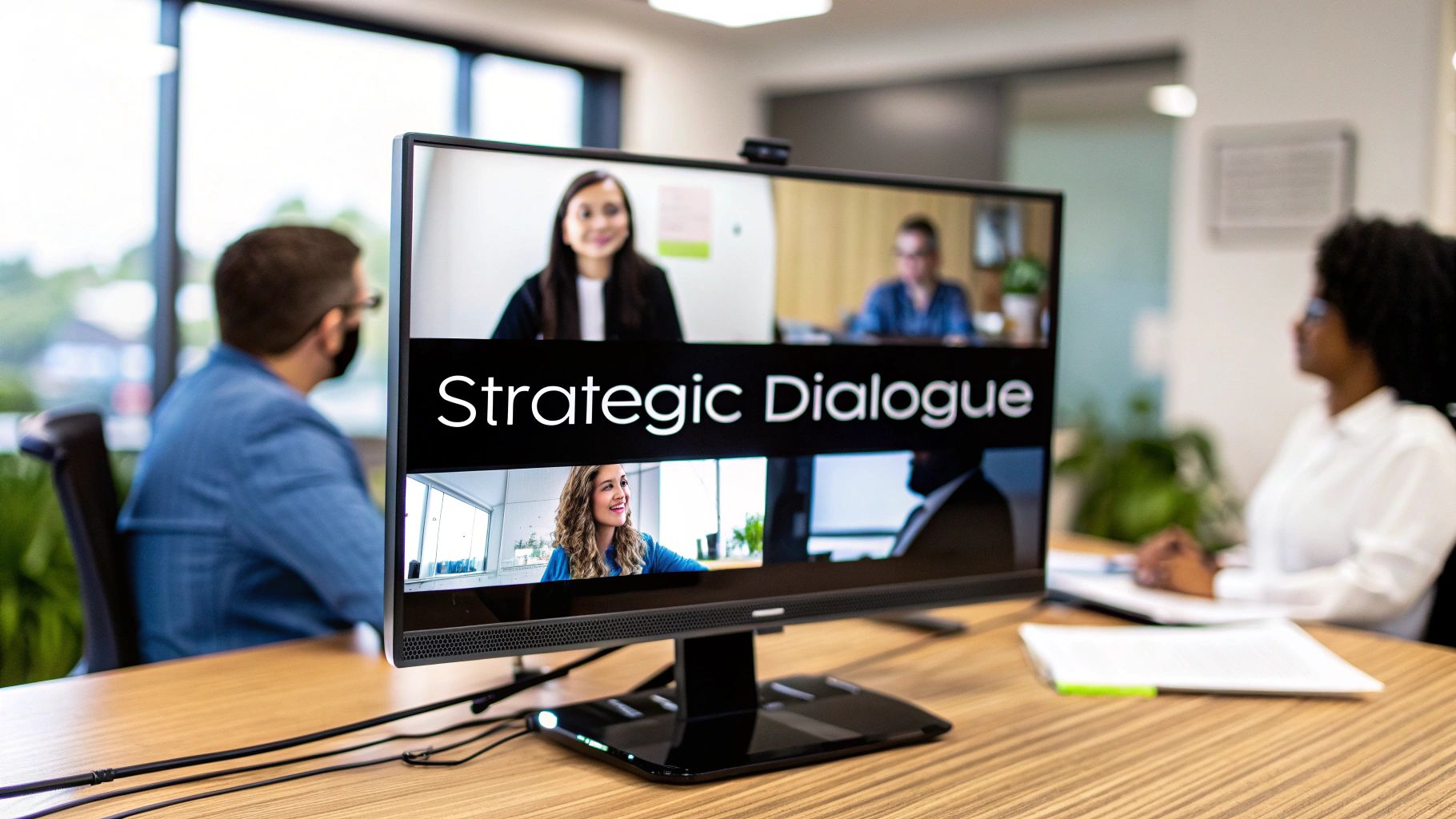
In a dynamic workplace, effective communication is the bedrock of success. It's the difference between an aligned, motivated team and a disconnected one working in silos. Yet, many businesses still rely on outdated methods that no longer cut through the noise, leading to disengagement and inefficiency. A strategic approach is no longer a "nice-to-have"; it's a critical component for agility and growth.
This guide moves beyond generic advice to explore 10 powerful organizational communication strategies designed for the modern workforce. We provide actionable tactics, real-world examples, and a fresh perspective on fostering a transparent and collaborative culture. You will learn not just what these strategies are, but how to implement them effectively. To understand the foundational shifts impacting how teams connect, it's helpful to delve into insights about the future of business communication.
From cultivating an open-door policy to implementing a 360-degree feedback system, each strategy offers a distinct advantage. We'll also examine how each approach can be amplified with modern tools like video conferencing, providing a clear blueprint for building a more connected and efficient organization. This list is your guide to refreshing your communication framework for 2025 and beyond.
1. Open Door Policy
An open door policy is one of the most foundational organizational communication strategies, encouraging employees to approach leadership with ideas, questions, or concerns without formal appointments. This method flattens traditional hierarchies, fostering a culture of transparency and trust where every voice is valued. By signaling that management is accessible and receptive, organizations can identify and address issues before they escalate, boosting morale and innovation.

Tech giants like Google famously embedded this into their culture, with founders maintaining accessible workspaces to promote spontaneous idea-sharing. Similarly, Southwest Airlines CEO Gary Kelly holds regular employee forums, a modern take on the open door concept pioneered by leaders like IBM's Thomas Watson Sr.
How to Implement an Effective Open Door Policy
To make this strategy successful, it requires more than just a declaration. Authenticity is key.
- Set Clear Boundaries: Communicate specific "open" times to balance accessibility with leaders' need for focused work. A truly open door that's always available can lead to burnout.
- Train Leaders in Active Listening: Managers must be coached to listen without immediate judgment and to validate employee concerns, even if a solution is not readily available.
- Follow Up Consistently: The policy loses credibility if feedback goes into a void. Leaders must follow up on conversations to show that employee input is taken seriously.
- Combine with Anonymous Channels: For highly sensitive issues, supplement the open door with an anonymous feedback system. This ensures all employees feel safe sharing, regardless of the topic.
This approach builds a psychologically safe environment, making it an invaluable strategy for any organization committed to genuine, two-way communication.
2. Internal Social Networks and Enterprise Social Media
Internal social networks, or Enterprise Social Networks (ESNs), function as private, company-specific platforms that mimic public social media. They empower employees to share updates, collaborate on projects, and build professional relationships across departments and geographic locations. This approach transforms top-down communication into a dynamic, multi-directional dialogue, breaking down silos and accelerating knowledge sharing.

Walmart utilizes Workplace by Meta to connect over two million employees, including frontline workers who traditionally lack access to corporate communications. Similarly, NASA leverages Yammer to foster collaboration among its 60,000+ employees across diverse facilities worldwide. These platforms, including Slack and Microsoft Teams, are essential organizational communication strategies for large, distributed workforces.
How to Implement an Effective ESN Strategy
A successful ESN requires more than just launching a platform; it needs a thoughtful rollout and sustained engagement. Strategic integration is crucial.
- Secure Executive Sponsorship: Active participation from leadership signals the platform's importance and encourages widespread adoption.
- Establish Clear Guidelines: Create a simple, clear usage policy to guide conversations, define appropriate content, and ensure a professional environment.
- Empower Community Champions: Identify enthusiastic employees to act as advocates, share success stories, and help their peers get comfortable with the new tool.
- Integrate with Existing Workflows: Connect the ESN with other business applications to make it a central hub for work, not just another destination. Combining these platforms with tools like an online whiteboard can significantly improve team productivity during collaborative sessions.
By cultivating a vibrant digital community, organizations can enhance employee engagement, streamline collaboration, and build a more connected and informed culture.
3. Town Hall Meetings
Town hall meetings are a powerful organizational communication strategy, serving as large-scale forums where leadership directly addresses the entire workforce. These events are crucial for transparently sharing company performance, strategic shifts, and future plans. They foster a sense of unity and shared purpose by giving every employee a direct line to ask questions and engage with top executives.

This practice was famously championed by tech leaders like Mark Zuckerberg's weekly Q&As at Facebook and Amazon's all-hands meetings where Jeff Bezos took unfiltered employee questions. Similarly, Microsoft’s CEO Satya Nadella uses company-wide meetings to align thousands of employees on strategic direction, demonstrating the model's effectiveness at scale.
How to Implement Effective Town Hall Meetings
A successful town hall is more than a presentation; it's an interactive dialogue that builds alignment and trust. Preparation is paramount.
- Schedule with Regularity: Hold town halls at a predictable cadence, such as quarterly, to build them into the company's cultural rhythm and manage expectations.
- Allow Anonymous Questions: Use a tool like Slido or a simple form to let employees submit questions anonymously. This encourages candor and surfaces difficult but important topics.
- Include Diverse Voices: Avoid making the event a solo CEO broadcast. Feature a variety of leaders and team members to present on their areas of expertise, reflecting the whole organization.
- Follow Up on Unanswered Questions: Acknowledge all submitted questions, even if you can't answer them live. Follow up with a summary or FAQ document to show that every query was valued.
- Ensure Accessibility: For distributed teams, leveraging technology for virtual events is key. Learn more about running effective virtual town hall meetings on aonmeetings.com to ensure inclusivity.
This strategy humanizes leadership and reinforces that the organization is one team moving toward a common goal, making it an essential tool for building a cohesive culture.
4. Cascade Communication Model
The cascade communication model is a top-down, hierarchical approach where information flows systematically from senior leadership through middle management to frontline employees. Each level receives the information, contextualizes it, and passes it to their direct reports. This strategy ensures message consistency while empowering managers to tailor delivery for their specific teams, making it a powerful tool in large-scale organizational communication strategies.
Retail giants like Walmart use this method to cascade policy changes from corporate to store level, while manufacturing leaders like Toyota communicate new safety protocols through their supervisory chains. The key is ensuring the message's integrity is maintained at each step, preventing the "telephone game" effect where details get lost in translation.
How to Implement an Effective Cascade Communication Model
A successful cascade relies on well-equipped managers and a clear, structured process. Managerial buy-in is paramount.
- Provide Comprehensive Briefing Materials: Equip managers with detailed talking points, FAQs, and background context so they can confidently and accurately answer questions from their teams.
- Allow Sufficient Time: Schedule a deliberate gap between when managers are briefed and when they must communicate with their teams. This gives them time to process the information and prepare.
- Train Managers on Delivery: Coach leaders not just on what to say, but how to say it. Effective delivery requires empathy, clarity, and the ability to connect the message to the team's daily work.
- Create Feedback Loops: The cascade should not be a one-way street. Implement a clear mechanism for feedback and questions to flow back up the chain of command, ensuring employee concerns are heard by leadership.
This structured approach is ideal for communicating significant changes, like strategic shifts or new policies, where consistency and contextualization are equally important.
5. Digital Signage and Visual Communication
Digital signage is an organizational communication strategy that uses electronic displays to share real-time information with employees in physical workspaces. This includes everything from video walls in lobbies to screens in break rooms and on production floors. By broadcasting company news, performance metrics, safety protocols, and employee recognition, it creates an ambient awareness of key messages, reaching everyone, especially deskless workers.
This method is highly effective in diverse environments. Amazon warehouses use digital boards to display real-time productivity and safety data, while hospital systems like the Mayo Clinic use screens for critical staff communications. This visual-first approach, popularized by platforms like ScreenCloud and Scala, ensures that vital information is not just sent, but seen and absorbed.
How to Implement Effective Digital Signage
Success with this strategy depends on dynamic, relevant content delivered in high-traffic areas. Strategic placement and fresh content are essential.
- Be Strategic with Placement: Install screens where employees naturally gather or pass by, such as break rooms, hallways, and production floors.
- Keep Content Scannable: Design visuals and messages to be understood in 10-15 seconds. Use bold text, strong imagery, and minimal wording.
- Rotate Content Frequently: Keep the displays engaging by regularly updating content. A stale screen quickly becomes part of the background. Mix corporate news with useful information like weather or local traffic.
- Integrate with Other Channels: Ensure the messaging on digital signs aligns with communications sent via email, intranet, or team chat apps for a cohesive strategy.
By turning physical spaces into communication hubs, digital signage reinforces company culture and keeps the entire workforce connected and informed.
6. Employee Newsletter and Email Communication
An employee newsletter is a structured, regular email communication that delivers curated organizational news, updates, and stories directly to employees' inboxes. This traditional yet effective tool has evolved from simple text emails to sophisticated, multimedia-rich publications. As one of the most direct and controlled organizational communication strategies, it ensures key messages reach the entire workforce consistently, reinforcing company culture and keeping everyone aligned.
Companies like Airbnb leverage their newsletters to share employee stories and highlight company culture, while IBM's 'Think' newsletter delivers company news and thought leadership to a massive global audience. Patagonia effectively uses its internal communications to rally employees around its core environmental initiatives and values, demonstrating the power of a well-executed newsletter.
How to Implement Effective Employee Newsletters
A great newsletter is more than a news dump; it's a strategic engagement tool. Consistency is key.
- Lead with Compelling Content: Write engaging subject lines to boost open rates and place the most critical information at the top. Keep the content scannable with headers, bullet points, and short paragraphs.
- Balance Corporate and Human Stories: While corporate announcements are necessary, balance them with employee spotlights, team wins, and user-generated content to make the newsletter relatable and authentic.
- Optimize for Modern Consumption: Ensure the newsletter is mobile-friendly, as many employees will read it on their phones. Limit each edition to 3-5 key stories to avoid overwhelming readers.
- Establish a Reliable Cadence: Send newsletters at consistent days and times to build a routine and manage employee expectations. Use A/B testing on formats and content to continuously improve engagement.
This approach transforms a simple email into a powerful channel for building community, reinforcing values, and ensuring every employee stays informed and connected.
7. Skip-Level Meetings
Skip-level meetings are strategic conversations between senior leaders and employees at least two levels below them, bypassing the direct supervisor. This approach provides executives with unfiltered insights into frontline realities, operational challenges, and employee morale. By creating a direct line of communication, it helps leadership stay connected to the organization's pulse and gives employees a valuable opportunity to feel heard by decision-makers.
This practice was famously championed by former Intel CEO Andy Grove, who met regularly with engineers several levels down. Today, Microsoft executives use skip-levels to connect with product teams, and retail leaders visit stores to speak with associates without managers present, demonstrating its effectiveness across industries.
How to Implement Effective Skip-Level Meetings
To succeed, this strategy must be implemented with care to avoid undermining middle managers. Transparency is crucial.
- Communicate the Purpose Clearly: Inform all parties, especially middle managers, that the goal is to gain broader perspective, not to micromanage or evaluate their performance.
- Establish Ground Rules: Assure employees of confidentiality to foster candor. Set expectations that the focus is on systemic issues and ideas, not individual complaints.
- Focus on Listening: Leaders should use this time to ask open-ended questions about challenges, team dynamics, and improvement ideas, rather than immediately solving problems.
- Follow Up on Themes: After the meeting, leaders should synthesize the feedback and share aggregate themes with the relevant middle managers. This builds trust and turns insights into action.
This organizational communication strategy effectively bridges the gap between the C-suite and the frontline, uncovering blind spots and empowering employees.
8. 360-Degree Feedback Communication System
A 360-degree feedback system is a comprehensive approach where employees receive confidential performance feedback from multiple sources, including supervisors, peers, subordinates, and even external clients. This organizational communication strategy moves beyond traditional top-down reviews, creating a culture of continuous dialogue. It acknowledges that valuable insights come from every direction, providing a well-rounded view of an individual's strengths and development areas.
General Electric famously used this system under Jack Welch to cultivate strong leaders. More recently, tech companies like Google have integrated it into their performance culture, and Adobe's "Check-in" process replaced annual reviews with ongoing, multi-source input, highlighting its modern relevance.
How to Implement a 360-Degree Feedback System
To be effective, this system must be framed as a developmental tool, not a punitive one. Trust is the foundation.
- Emphasize Development: Clearly communicate that the goal is professional growth and skill enhancement, not to penalize employees. This encourages honest and constructive participation.
- Ensure Anonymity: Use a trusted platform or third-party service to guarantee that all feedback is anonymous. Without this safeguard, participants will hesitate to provide candid responses.
- Train Participants: Coach all employees on how to give and receive constructive, behavior-based feedback. Vague or personal comments are counterproductive.
- Provide Professional Coaching: Offer sessions with managers or coaches to help individuals interpret their feedback reports and create actionable development plans.
- Start with Leadership: Introduce the 360-degree process at the senior leadership level first. This models vulnerability and a commitment to growth from the top down.
When implemented thoughtfully, this method fosters deep self-awareness and strengthens communication channels across the entire organizational chart.
9. Strategic Storytelling and Narrative Communication
Strategic storytelling is an organizational communication strategy that uses narrative to convey values, goals, and change initiatives. Instead of relying only on data, it leverages stories to create emotional connections, making complex information memorable and relatable. This method helps employees understand their role within the larger company vision, fostering a sense of purpose and shared identity. By framing messages within a compelling narrative, leaders can inspire action and build a stronger, more engaged culture.
This approach was masterfully used by Apple's Steve Jobs, who turned product launches into epic narratives of innovation. Similarly, Microsoft under Satya Nadella shifted its culture by highlighting customer and employee transformation stories, connecting its mission directly to human impact. These examples show how a well-crafted story can be more powerful than any a formal presentation.
How to Implement Effective Strategic Storytelling
To make this strategy work, stories must be authentic and purposeful. Connection is the goal.
- Structure the Narrative: Use classic structures like the "hero's journey" (challenge, struggle, resolution) to frame messages. Feature real employees or customers as protagonists to make stories relatable.
- Focus on Sensory Details: Include specific, vivid details that help the audience visualize the story. This creates a stronger emotional and cognitive impact.
- Connect to the Bigger Picture: Ensure every story reinforces a core organizational value or strategic goal. The narrative should always have a clear "why" behind it.
- Leverage Video for Emotion: Use video to capture the personality and emotion behind a story, which is especially powerful for remote teams. Mastering the art of virtual storytelling is key in a hybrid workplace.
- Balance with Data: While stories are powerful, pairing them with key data points adds credibility and satisfies analytical thinkers, making the message more robust.
This approach transforms abstract goals into tangible, human experiences, making it one of the most persuasive organizational communication strategies available.
10. Integrated Multi-Channel Communication Strategy
An integrated multi-channel communication strategy coordinates messaging across multiple platforms to ensure consistent and reinforced communication. This approach acknowledges that employees have different channel preferences and that critical messages must be repeated across various media for maximum reach and retention. Instead of using channels in isolation, it orchestrates email, meetings, and digital platforms in a synchronized, campaign-style approach for major initiatives.
This method is crucial during significant events like mergers or major policy changes. For instance, when communicating COVID-19 workplace policies, most organizations used a multi-channel blitz of emails, CEO videos, manager toolkits, and intranet updates. Similarly, companies like Apple use this for internal product launches, building excitement through a sequence of all-hands meetings, team briefings, and internal previews.
How to Implement an Effective Multi-Channel Strategy
A successful campaign requires careful planning and coordination, not just content duplication. Consistency is paramount.
- Map Employee Preferences: Start by understanding how different employee segments consume information. Conduct a quick survey to identify the most effective channels for various teams.
- Develop a Core Message Platform: Create a central document with the key messages, talking points, and FAQs. This ensures all content, regardless of the channel, is aligned.
- Adapt Content for Each Channel: Don't just copy and paste. Tailor the message to the strengths of each medium; for example, use visuals on digital signage, detailed information in an email, and interactive Q&As in a town hall.
- Sequence the Rollout: Plan the timing of your communications. A typical sequence might start with a leadership announcement, followed by manager cascades, and then a broad employee email.
- Include Feedback Loops: Incorporate mechanisms for two-way communication, such as surveys, Q&A sessions, or dedicated Slack channels, to measure understanding and address concerns.
This organizational communication strategy ensures that important messages are not only seen but also understood and internalized by the entire workforce.
Top 10 Organizational Communication Strategies Comparison
| Communication Strategy | Implementation Complexity | Resource Requirements | Expected Outcomes | Ideal Use Cases | Key Advantages |
|---|---|---|---|---|---|
| Open Door Policy | Low to moderate; requires cultural shift | Time investment from management | Increased engagement, trust, innovation | Small to mid-size organizations, cultural change efforts | Direct access to leadership, fosters trust |
| Internal Social Networks and Enterprise Social Media | Moderate to high; platform setup and governance | IT infrastructure, ongoing moderation | Enhanced collaboration, knowledge sharing | Medium to large, remote/distributed teams | Breaks silos, supports remote work |
| Town Hall Meetings | Moderate; scheduling and preparation needed | Coordination resources, multimedia | Organizational alignment, transparency | Large organizations, major updates | Leadership visibility, direct Q&A |
| Cascade Communication Model | High; structured rollout and training | Manager training, communication tools | Consistent messaging, accountability | Large hierarchical organizations | Tailored communication, accountability |
| Digital Signage and Visual Communication | Moderate to high; hardware/software investment | Hardware, content creation team | Passive information absorption, broad reach | Deskless/frontline workers, high-traffic areas | Real-time updates, visual engagement |
| Employee Newsletter and Email Communication | Low to moderate; content creation ongoing | Content team, email platform | Detailed information delivery, measurable engagement | Broad audience, recurring updates | Direct inbox delivery, cost-effective |
| Skip-Level Meetings | Moderate; scheduling and management communication | Time from senior leaders | Unfiltered insights, increased trust | Organizations needing leadership connection | Bypasses hierarchy, uncovers hidden issues |
| 360-Degree Feedback Communication System | High; tool setup, training, and administration | Specialized software, coaching | Comprehensive performance insights | Leadership development, culture of feedback | Multi-source feedback, reduces bias |
| Strategic Storytelling and Narrative Communication | Moderate; requires skilled content creators | Time and creative resources | Emotional engagement, cultural alignment | Change initiatives, cultural reinforcement | Memorable, persuasive, humanizes messages |
| Integrated Multi-Channel Communication Strategy | High; complex coordination and planning | Cross-functional teams, tools | Consistent, reinforced messages, broad reach | Major initiatives, complex communications | Maximizes reach, accommodates diverse styles |
Building Your Integrated Communication Framework
The journey to exceptional organizational communication is not a destination but a continuous process of refinement. We've explored a diverse toolkit of ten powerful strategies, from the foundational Open Door Policy to the comprehensive Integrated Multi-Channel Communication Strategy. Each method offers a unique pathway to enhancing transparency, boosting morale, and driving strategic alignment across every level of your organization.
The key takeaway is that there is no one-size-fits-all solution. A startup's dynamic, feedback-rich environment might thrive on skip-level meetings and a vibrant internal social network. In contrast, a large, distributed enterprise may lean on a structured cascade model and formal town halls to ensure message consistency. The true power lies not in adopting a single strategy, but in thoughtfully weaving several together into a cohesive, integrated framework that reflects your company’s unique culture, goals, and operational realities.
From Strategy to Action: Your Next Steps
Moving from theory to practice is the most critical step. Rather than attempting a complete overhaul overnight, focus on incremental, high-impact changes.
- Conduct a Communication Audit: Start by identifying your most significant communication bottlenecks. Are remote employees feeling disconnected? Is cross-departmental collaboration sluggish? Use employee surveys or focus groups to gather honest feedback and pinpoint the most urgent needs.
- Prioritize and Pilot: Based on your audit, select one or two strategies that directly address these pain points. If top-down messaging is weak, pilot the cascade model within a single department. If leadership feels out of touch, introduce skip-level meetings for a specific team. Measure the results before a full-scale rollout.
- Empower Your Channels: To fuel a truly integrated multi-channel strategy, your organization needs robust and consistent messaging. This requires a solid understanding of content development, and exploring the foundational aspects of effective content creation can equip your teams to produce compelling narratives for newsletters, digital signage, and internal platforms.
The Lasting Impact of a Connected Workforce
Mastering these organizational communication strategies transcends simple information sharing; it’s about building a resilient, agile, and deeply engaged workforce. When employees feel heard, informed, and connected to a shared purpose, the results are transformative. You unlock higher levels of innovation, improve employee retention, and build a stronger, more unified organizational identity.
Ultimately, effective communication is the essential connective tissue that holds your organization together, enabling it to adapt, grow, and succeed in an ever-changing landscape. By committing to building a robust and intentional communication framework, you are not just improving processes; you are investing in your most valuable asset: your people.
Ready to supercharge your communication strategy with a powerful, intuitive video conferencing platform? Discover how AONMeetings can transform your virtual town halls, 360-degree feedback sessions, and global team collaborations with features designed for engagement. Explore AONMeetings today and build a more connected, collaborative, and successful organization.