
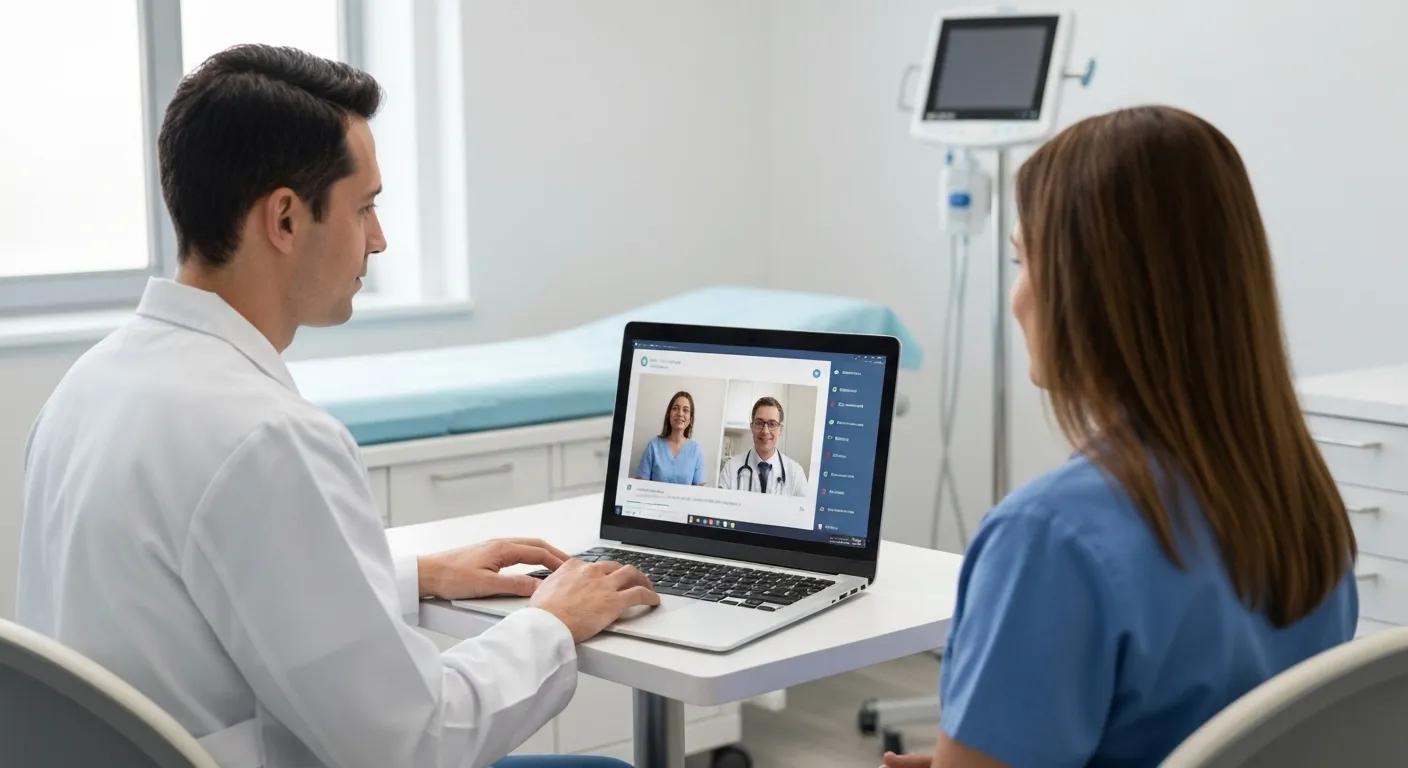

What Makes Video Conferencing HIPAA Compliant? Complete 2025 Guide to Secure Telehealth Communication
Healthcare organizations must ensure that video conferencing platforms safeguard Protected Health Information (PHI) to avoid steep fines and reputational damage. This complete 2025 guide explains what makes video conferencing HIPAA compliant by unpacking core requirements, defining PHI in telehealth, reviewing leading platforms, detailing implementation best practices, exploring technical safeguards, outlining legal considerations, and forecasting future trends. You’ll learn how Business Associate Agreements (BAAs), encryption protocols, access controls, audit trails, disaster recovery plans, and breach notification procedures work together to secure telehealth sessions. By the end of this article, you’ll have a step-by-step roadmap to select, deploy, and maintain HIPAA-compliant video conferencing solutions that protect patient data and build trust.
What Are the Core HIPAA Requirements for Video Conferencing Compliance?
A HIPAA-compliant video conferencing solution must implement administrative, technical, and physical safeguards that collectively protect PHI during virtual visits. These safeguards ensure only authorized users access sensitive information, all activity is logged, data is encrypted in transit and at rest, and vendors sign a Business Associate Agreement. Together, these measures reduce the risk of unauthorized disclosure and establish accountability across telehealth workflows.
HIPAA Security Rule Overview
The HIPAA Security Rule establishes a national standard to protect individuals’ electronic protected health information (ePHI) that is created, received, maintained, or transmitted by a covered entity. This includes administrative, physical, and technical safeguards to ensure the confidentiality, integrity, and availability of ePHI.
U.S. Department of Health & Human Services, Summary of the HIPAA Security Rule
This source provides the foundational legal framework for understanding the requirements for HIPAA compliance in video conferencing.
What Is a Business Associate Agreement (BAA) and Why Is It Essential?

A Business Associate Agreement is a legal contract that defines each party’s responsibilities for safeguarding PHI and outlines liability in case of breaches. By formally assigning security obligations to the video conferencing vendor, a BAA ensures compliance with HIPAA Security and Privacy Rules and clarifies breach-notification procedures.
Business Associate Agreements (BAAs)
A Business Associate Agreement (BAA) is a contract between a covered entity and a business associate that outlines the responsibilities of each party in protecting protected health information (PHI). The BAA ensures that business associates are held accountable for safeguarding PHI, as required by HIPAA.
Office for Civil Rights (OCR), Business Associates
This citation clarifies the legal necessity of BAAs for video conferencing platforms that handle patient data.
Below is a breakdown of key BAA clauses:
| Clause | Purpose | Key Details |
|---|---|---|
| PHI Usage and Disclosure | Restricts how the vendor uses PHI | Limits to treatment, payment, operations |
| Security Safeguards | Commits vendor to technical controls | Requires encryption, access controls |
| Incident Reporting | Defines breach-notification timeline | Reports within 60 days of discovery |
| Subcontractor Requirements | Extends obligations to subcontractors | Mandates same BAA terms downstream |
| Termination Procedures | Ensures return or destruction of PHI | Specifies secure data disposal |
How Does End-to-End Encryption Protect Patient Health Information (PHI)?

End-to-end encryption scrambles audio, video, and chat data so only meeting endpoints can decrypt it, preventing eavesdropping or interception. By applying standards like AES-256 for data at rest and TLS 1.2+ or SRTP for data in transit, encryption ensures confidentiality and integrity of telehealth sessions. Encrypted streams maintain patient privacy and satisfy HIPAA’s requirement for data protection during transmission and storage.
Encryption Standards for Data Protection
Encryption is a critical technical safeguard for protecting the confidentiality of protected health information (PHI). The National Institute of Standards and Technology (NIST) provides guidelines and standards for encryption algorithms, such as AES-256, that are used to secure data at rest and in transit.
National Institute of Standards and Technology (NIST), Computer Security Resource Center
This source supports the article’s discussion of encryption standards and their role in securing telehealth communications.
What Access Controls and Authentication Measures Ensure Secure Video Calls?
Unique user IDs, strong passwords, role-based access, and multi-factor authentication (MFA) collectively verify identities and limit PHI exposure to authorized personnel. Implementing these measures prevents unauthorized logins and enforces the principle of least privilege.
- Require unique credentials for each user.
- Enforce MFA with TOTP or hardware tokens.
- Assign permissions based on staff roles.
- Lock inactive sessions after a defined timeout.
Together, these controls reduce unauthorized access risk and create a secure authentication framework, leading directly into the need for detailed activity tracking.
Why Are Audit Trails and Activity Logs Critical for HIPAA Compliance?
Comprehensive audit logs record who accessed which data, when, and from where, enabling continuous monitoring and forensic analysis. These records satisfy HIPAA’s technical safeguard for audit controls and support investigations after potential breaches.
- Timestamped login and logout events.
- Records of file transfers and document sharing.
- Session metrics including IP addresses and device types.
Audit data makes accountability transparent and informs risk assessments, which in turn shape resilient backup and recovery strategies.
How Should Data Storage, Backup, and Disaster Recovery Be Managed?
Secure storage and robust backup processes protect PHI against data loss, system failures, and natural disasters. According to HIPAA’s contingency planning requirements, organizations must regularly back up encrypted datasets, test restore procedures, and maintain off-site archives.
- Encrypt backups using FIPS 140-2 validated algorithms.
- Store redundant copies in geographically diverse locations.
- Conduct quarterly recovery drills to verify integrity.
These practices ensure continuity of care and preserve patient records, paving the way for defined breach-notification workflows.
What Are the Breach Notification Procedures for Video Conferencing?
HIPAA mandates that covered entities and business associates report breaches of unsecured PHI to affected individuals, HHS, and, in some cases, the media within defined timeframes. A structured breach response plan includes:
- Identification and Containment – Quickly isolate affected systems.
- Risk Assessment – Evaluate likelihood of PHI compromise.
- Notification – Issue reports within 60 days of discovery.
- Remediation – Implement corrective actions to prevent recurrence.
Clear procedures minimize regulatory penalties and reinforce patient trust, creating a foundation for understanding PHI definitions.
How Does HIPAA Define Protected Health Information (PHI) in Video Conferencing?
Protected Health Information encompasses any individually identifiable data shared during telehealth consultations, including audio, video, text, and metadata. HIPAA defines PHI to ensure comprehensive privacy protections regardless of communication modality.
What Types of Information Are Considered PHI in Telehealth Sessions?
PHI in video conferencing covers patient names, medical histories, treatment details, billing records, biometric data, device identifiers, and session logs. These elements are sensitive because they can directly or indirectly reveal a patient’s identity.
- Demographic information (age, address)
- Medical diagnoses and treatment plans
- Payment and insurance details
- Clinical notes and test results
Recognizing these categories guides platform configuration and informs the roles covered entities and business associates play.
Who Are Covered Entities and Business Associates in Video Conferencing?
Covered entities include healthcare providers, health plans, and healthcare clearinghouses that initiate telehealth sessions. Business associates are vendors—such as video conferencing software providers—that handle PHI on behalf of covered entities. Both parties must comply with HIPAA safeguards and sign a BAA to formalize obligations.
How Does HIPAA Privacy Rule Apply to Video Conferencing Platforms?
The Privacy Rule restricts uses and disclosures of PHI without patient authorization, requiring platforms to implement encryption, access controls, and user consent mechanisms. Platforms must offer features like virtual waiting rooms and session recording controls to align with permitted disclosures for treatment and operations. Compliance with the Privacy Rule assures patients that their data is handled responsibly.
Which Video Conferencing Platforms Are HIPAA Compliant in 2025?
Leading telehealth platforms combine robust security controls, signed BAAs, and healthcare-focused features to meet HIPAA requirements. Below is a comparative overview of major solutions.
What HIPAA Features Does Zoom for Healthcare Offer?
Zoom for Healthcare provides AES 256-bit GCM encryption (not true end-to-end encryption), virtual waiting rooms, session watermarking, and comprehensive audit logs under a signed BAA.
| Feature | Implementation | Benefit |
|---|---|---|
| AES-256 encryption | Data at rest | Safeguards recorded sessions |
| SRTP/TLS | Data in transit | Prevents interception of live streams |
| Virtual Waiting Room | Controlled participant entry | Enhances patient privacy |
| Attendee Watermark | On-screen identifiers | Discourages unauthorized recording |
| Detailed Audit Logs | Accessible via dashboard | Supports forensic analysis |
How Does Microsoft Teams Ensure Telehealth Compliance?
Microsoft Teams integrates with Azure’s security stack to enforce MFA, DLP policies, and eDiscovery under a healthcare BAA. Built-in role-based access and encrypted channel communications streamline HIPAA adherence without compromising collaboration.
What Makes Doxy.me a Secure Telehealth Platform?
Doxy.me offers browser-based calls with no downloads, AES-128 encryption in transit, and patient-initiated sessions that limit platform access to individual appointments. A clear BAA and minimal-configuration design reduce administrative overhead for small practices.
How Do GoTo Meeting and VSee Compare for HIPAA Compliance?
Below is a side-by-side comparison:
| Platform | Encryption | BAA Offered | Key Differentiator |
|---|---|---|---|
| GoTo Meeting | AES-256 / TLS | Yes | Integrated EHR plugins |
| VSee | TLS 1.2 / SRTP | Yes | Built-in medical forms |
This comparison underscores how feature sets align with diverse telehealth workflows and integration requirements.
What Other Notable HIPAA Compliant Platforms Should Healthcare Providers Consider?
Several solutions support secure telehealth:
- RingCentral for integrated voice, SMS, and video under a BAA
- SimplePractice with built-in scheduling and charting
- Updox offering secure messaging and e-fax
- Callbridge featuring virtual waiting rooms and session watermarking
Exploring these options ensures providers find the right balance of functionality and compliance as they implement telehealth.
How Can Healthcare Providers Implement and Maintain HIPAA Compliance in Video Conferencing?
Sustained compliance requires operational rigor across policies, training, risk management, device security, and system integration. A holistic strategy embeds HIPAA safeguards into everyday workflows.
Why Is Staff Training and Policy Development Vital for Compliance?
Regular training educates clinicians and administrators on PHI handling, platform usage, incident response procedures, and BAA obligations. Written policies codify expectations for authentication, data handling, and breach reporting, fostering a culture of security and accountability.
- Annual HIPAA refresher courses
- Onboarding modules for new hires
- Simulated breach drills to test response readiness
Consistent education reduces human error and naturally leads into systematic risk assessments.
How Are Risk Assessments and Security Audits Conducted for Telehealth?
Comprehensive risk assessments identify vulnerabilities in network configurations, endpoint devices, and software settings. Audits validate the effectiveness of encryption, access controls, and logging practices, producing actionable remediation plans.
- Inventory telehealth assets and PHI flow.
- Evaluate technical controls against NIST guidelines.
- Document findings and establish corrective timelines.
- Reassess after major updates or incidents.
Robust auditing maintains a feedback loop that informs mobile device policies.
What Are Best Practices for Mobile Device Security in Telehealth?
Mobile devices used for video calls must enforce strong encryption, remote wipe capabilities, and device-level passcodes.
- Enable full-disk encryption on smartphones and tablets.
- Require device-level biometrics or complex PINs.
- Implement Mobile Device Management (MDM) for policy enforcement.
Securing endpoints supports seamless integration with electronic health records.
How Does Integration with EHR/EMR Systems Affect Compliance?
Integrating video conferencing with EHR/EMR platforms streamlines documentation but increases the PHI attack surface. Secure APIs, role-based permissions, and encrypted data exchanges ensure that patient records remain protected as they flow between systems. Tight integration enhances clinical workflows while maintaining HIPAA safeguards.
What Are the Technical Safeguards That Enhance HIPAA Compliance in Video Conferencing?
Technical safeguards encompass the encryption, transmission protocols, session controls, and advanced features that protect PHI throughout the telehealth lifecycle.
How Do Secure Data Transmission Protocols Protect PHI?
Secure protocols like SRTP for media streams and TLS 1.2+ for signaling prevent interception and tampering of audio/video data. Virtual Private Networks (VPNs) add an extra encryption layer for remote clinician connections.
- SRTP secures real-time media with per-packet encryption.
- TLS encrypts control messages and session setup.
- VPN tunnels protect entire communication channels.
These protocols form the backbone of secure telehealth, leading directly into encryption standards.
What Encryption Standards Are Required for Data at Rest and in Transit?
HIPAA requires FIPS 140-2 validated algorithms such as AES-256 for data at rest and TLS 1.2+ for data in transit. Below is an overview:
| Data State | Standard | Validation |
|---|---|---|
| At Rest | AES-256 | FIPS 140-2 certified modules |
| In Transit | TLS 1.2+ | NIST-approved cipher suites |
| Media Streams | SRTP | RFC 3711 compliance |
Adhering to these standards ensures encrypted data remains unreadable without authorized keys, setting the stage for secure session management.
How Is Secure Session Management Implemented in Telehealth Platforms?
Session controls enforce automatic timeouts, single-session limits, and dynamic access tokens that expire after a defined window. These measures prevent credential reuse and orphaned sessions.
- Idle session termination after 5 minutes
- One-time use meeting tokens
- Enforced logout on unauthorized device detection
Implementing session management mitigates insider threats and unauthorized access, which dovetails into virtual waiting room practices.
What Role Do Virtual Waiting Rooms and Secure Recording Play in Compliance?
Virtual waiting rooms gate patient entry, preventing unauthorized participants from joining calls before a clinician admits them. Secure recording features watermark sessions and encrypt stored files to maintain chain-of-custody for recorded PHI.
Together, these features add layers of control and auditability that satisfy HIPAA’s technical and physical safeguard requirements.
What Are the Legal and Regulatory Considerations for HIPAA Compliant Video Conferencing?
Legal and regulatory factors shape vendor contracts, enforcement policies, and the broader telehealth landscape. Understanding these rules is critical for risk mitigation.
Why Is a Signed BAA Mandatory for Video Conferencing Vendors?
A signed BAA is legally required whenever a vendor handles PHI on behalf of a covered entity. Without it, both parties risk civil and criminal penalties under HIPAA and HITECH Act provisions. The BAA enshrines PHI protection obligations, breach reporting timelines, and liability limits.
How Do HIPAA Privacy and Security Rules Apply to Telehealth?
The Privacy Rule governs permitted uses and disclosures of PHI, while the Security Rule mandates administrative, physical, and technical safeguards. Telehealth platforms must adhere to both by providing access controls, encryption, logging, and clear patient consent mechanisms. Compliance reduces legal exposure and aligns virtual care with traditional care standards.
What Are the Implications of the HITECH Act on Video Conferencing Compliance?
The HITECH Act strengthened HIPAA enforcement by raising breach-notification requirements, increasing penalty tiers, and expanding OCR audit authority. Video conferencing vendors and healthcare providers must demonstrate due diligence in security reviews and timely breach reporting to comply with heightened HITECH provisions.
How Did COVID-19 Enforcement Discretion Affect Compliance Requirements?
During the public health emergency, OCR allowed good-faith use of non-public facing remote communication tools without penalty. Since the discretion ended in May 2023, full HIPAA compliance—including BAAs and encryption—has been required. Providers must now reassess any interim solutions and upgrade to fully compliant platforms.
What Are the Future Trends and Market Insights for HIPAA Compliant Video Conferencing?
Emerging technologies, evolving regulations, and market dynamics will shape telehealth security standards beyond 2025. Staying informed on trends ensures proactive compliance.
How Is the Telehealth Market Projected to Grow Through 2033?
The HIPAA-compliant video conferencing market reached approximately $1.4 billion in 2025 and is forecast to grow at about 5.9% CAGR through 2033. Rising telehealth adoption, remote patient monitoring, and stringent data privacy requirements drive this sustained expansion.
What Emerging Technologies Will Impact HIPAA Compliance?
Advancements like AI-powered compliance monitoring, blockchain-based audit trails, and quantum-resistant encryption will enhance PHI protection. These innovations promise greater automation of risk detection and immutable logging to uphold security standards in complex telehealth ecosystems.
How Are Regulatory Changes Expected to Evolve Beyond 2025?
Anticipated updates include expanded interoperability mandates, revised encryption benchmarks, and stricter breach-notification thresholds. Regulators are likely to publish updated guidance on privacy rule applications for novel telehealth modalities and device-based data collection.
What Are Real-World Examples of Successful HIPAA Compliant Video Conferencing Implementations?
A regional health system integrated a fully encrypted platform with its EHR, reducing no-show rates by 30% and improving documentation accuracy. A mental health clinic deployed virtual waiting rooms and MFA-protected sessions, resulting in zero privacy incidents over two years. These cases illustrate how technical and operational safeguards yield tangible improvements in patient engagement and data integrity.
What Frequently Asked Questions Do Healthcare Providers Have About HIPAA Compliant Video Conferencing?
Providers often seek concise guidance on compliance fundamentals, vendor selection, and best practices for secure virtual care platforms. The following sections address those core concerns.
What Makes a Video Conferencing Platform HIPAA Compliant?
A platform is HIPAA compliant when it enforces encryption (note: true end-to-end encryption is rare in healthcare platforms), strict access controls, comprehensive audit trails, secure recording safeguards, and a signed BAA that assigns PHI protection responsibilities. These combined safeguards protect patient data throughout telehealth workflows.
Do I Need a Business Associate Agreement (BAA) for HIPAA Compliant Video Conferencing?
Yes, any vendor handling PHI must sign a BAA that outlines encryption requirements, incident response obligations, subcontractor rules, and breach notification timelines. Securing this agreement is a legal prerequisite for using a platform in clinical contexts.
Is Zoom for Healthcare Fully HIPAA Compliant?
Zoom for Healthcare meets HIPAA standards through AES-256 GCM encryption (not true end-to-end encryption), SRTP, virtual waiting rooms, session watermarking, and a comprehensive BAA. Its healthcare tier includes features specifically designed to address Privacy and Security Rule requirements.
What Are the Best Practices for Maintaining Compliance During Virtual Consultations?
Maintain compliance by using unique user credentials, enforcing MFA, limiting session recordings, monitoring audit logs, and updating policies regularly. Consistent staff training and periodic risk assessments ensure that technical safeguards keep pace with emerging threats.
How Can I Verify a Video Conferencing Platform’s HIPAA Compliance?
Verify compliance by reviewing the vendor’s signed BAA, confirming FIPS 140-2 or NIST-approved encryption, inspecting audit-log capabilities, and checking for features like virtual waiting rooms and session timeouts. Documentation of third-party security assessments and SOC 2 reports further substantiates a platform’s compliance status.
Patients and providers benefit when telehealth solutions integrate robust safeguards, clear policies, and continuous monitoring. By following these guidelines, organizations can confidently deploy video conferencing tools that meet HIPAA’s rigorous standards and support secure, patient-centered care.
Ready to Enhance Your Telehealth Security?
Discover how Aonmeetings.com can provide a secure and compliant video conferencing solution for your healthcare practice.