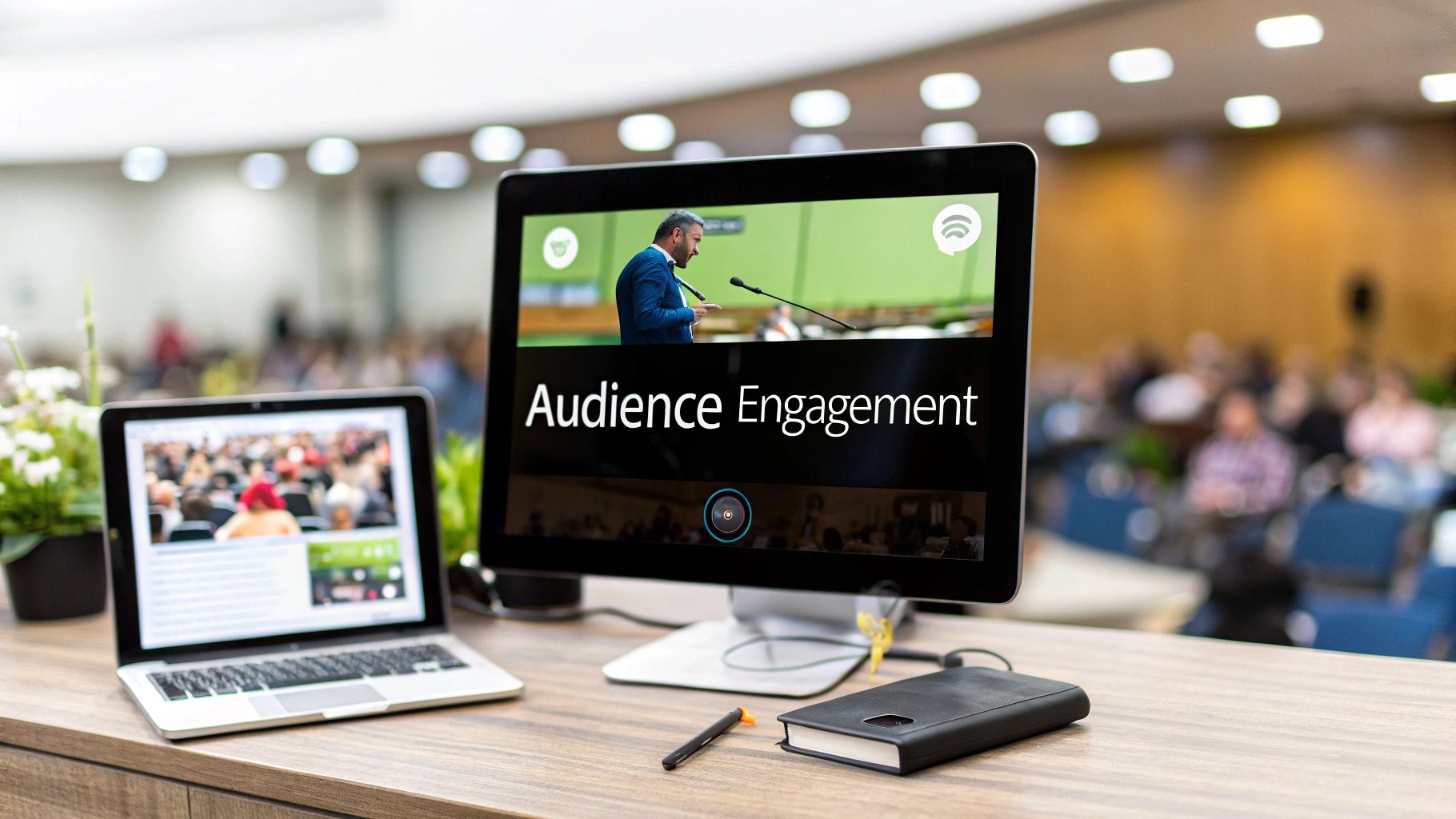
Virtual events are no longer a novelty; they are a cornerstone of modern communication. However, the biggest challenge isn't getting people to show up, it's keeping them engaged, focused, and actively participating. The era of passive screen-watching is over. Today's audiences expect interactive, memorable experiences that deliver real value and combat the digital fatigue that sets in during back-to-back online sessions. A truly successful virtual event feels less like a webinar and more like an immersive, participatory experience.
This shift means that effective audience interaction is now a critical differentiator. Creating an environment where attendees can connect, contribute, and feel present is essential for making a lasting impact. The difference between a forgotten webinar and a memorable virtual conference often comes down to the quality and creativity of the engagement strategies employed.
In this guide, we'll explore 10 actionable virtual event engagement ideas that move beyond the basics. We will provide practical implementation tips and real-world examples for each, designed to help you transform passive viewers into active participants. From gamification that sparks friendly competition to immersive VR experiences that transport your audience, these strategies are designed to help you create an online event that resonates long after the final session ends.
1. Interactive Live Polling and Q&A Sessions
One of the most effective virtual event engagement ideas is transforming passive viewers into active participants with real-time polling and structured Q&A sessions. Instead of a one-way broadcast, these tools create an immediate feedback loop, allowing presenters to gauge audience understanding, gather opinions, and address questions as they arise. This simple addition makes content more dynamic and responsive to the audience's interests.
Platforms like Slido, Mentimeter, and even built-in features within Cisco Webex or Microsoft Teams make it easy to launch a poll or manage questions without disrupting the presentation flow. This direct interaction keeps attendees focused and invested, as their input visibly shapes the conversation.

Why It Works
This method directly counters the "Zoom fatigue" that sets in during long, non-interactive presentations. By prompting attendees for their thoughts, you are not just presenting to them; you are collaborating with them. Displaying poll results live creates a shared experience and sense of community, while a well-managed Q&A ensures that the content is relevant and valuable to everyone present.
How to Implement It
- Prepare Questions in Advance: Design polls that are quick and easy to answer. Mix multiple-choice questions for fast data collection with open-ended ones for deeper insights.
- Allocate Dedicated Time: Set aside specific moments for Q&A rather than interrupting the speaker continuously. This maintains the event's momentum while ensuring all voices are heard.
- Use a Moderator: Have a dedicated moderator manage incoming questions, grouping similar ones and prioritizing the most relevant topics for the speaker to address.
- Display Results Instantly: Share poll results on-screen to create a visual focal point and spark further discussion. For detailed guidance, explore these best practices on how to host an interactive virtual Q&A session.
2. Breakout Rooms and Networking Sessions
One of the best virtual event engagement ideas for fostering genuine connection is using breakout rooms and dedicated networking sessions. These features divide a large audience into smaller, more manageable groups for focused discussions, collaborative activities, or informal networking. This approach transforms a passive viewing experience into an active, participatory one where attendees can share ideas and build relationships directly.
Platforms like Zoom, Microsoft Teams, and Airmeet have popularized this feature, allowing event hosts to create intimate settings that mimic in-person table talks or workshop groups. By moving beyond a single-presenter format, breakout rooms empower attendees to connect on a more personal level, which is often a primary goal of any event, virtual or otherwise.

Why It Works
Large virtual audiences can feel anonymous and isolating, making it difficult for attendees to engage meaningfully. Breakout rooms solve this by creating smaller, psychologically safer spaces where individuals are more likely to speak up, ask questions, and interact with peers. This structured networking prevents the awkwardness of trying to connect in a crowded main session and ensures every participant has a chance to contribute.
How to Implement It
- Set Clear Objectives and Time Limits: Define a specific goal for each breakout session, such as a brainstorming task or a guided networking prompt, and keep it brief (15-20 minutes) to maintain energy.
- Assign Trained Facilitators: For larger events, assign a moderator to each room to guide the conversation, manage time, and ensure the discussion stays on topic.
- Provide Icebreaker Questions: Kickstart conversations by giving each group a fun or thought-provoking question to answer. This removes the initial barrier to interaction.
- Make Participation Optional: Offer networking breakout rooms as an optional track for those who are eager to connect, while allowing others to remain in the main session or take a break. For more strategies, check out these tips on how to use breakout rooms for more productive online meetings.
3. Gamification Elements and Leaderboards
Integrating game mechanics is a powerful way to boost motivation, encourage participation, and create friendly competition. This approach transforms the event experience by adding elements like points, badges, and real-time leaderboards for completing specific actions such as visiting virtual booths, asking questions, or networking with other attendees. It taps into our natural desire for achievement and recognition, making engagement feel less like a task and more like a game.
Event platforms like Hopin and Bizzabo often include built-in achievement systems, while standalone tools like Kahoot! can be used for live trivia tournaments. By assigning value to key event activities, you guide attendees toward the most important content and connections, which is one of the most effective virtual event engagement ideas for driving specific behaviors.

Why It Works
Gamification introduces a layer of fun and competition that combats attendee passivity. It provides clear incentives for exploration and interaction, motivating attendees to engage more deeply with the event platform and its content. A public leaderboard creates a sense of community and shared purpose, encouraging participants to stay active and see how they stack up against their peers.
How to Implement It
- Keep It Simple: Design straightforward challenges with transparent scoring. If the rules are too complex, attendees will disengage.
- Offer Meaningful Rewards: Align prizes with your audience's interests, such as exclusive content, gift cards, or a one-on-one meeting with an industry expert.
- Recognize Diverse Achievements: Reward more than just the top performers. Award badges for various activities like "Top Networker" or "Session Superstar" to include more people.
- Balance Competition and Collaboration: While leaderboards are great, also consider team-based challenges that encourage attendees to work together. Beyond simple points, more elaborate virtual activities can include how to launch an unforgettable Web3 adventure with treasure hunts to create deeply engaging experiences. To discover more about this strategy, you can explore the insights on why gamification is the future of virtual meetings.
4. Virtual Networking Lounges and Speed Networking
One of the biggest challenges in virtual events is replicating the serendipitous connections made during in-person coffee breaks or hallway chats. Virtual networking lounges and speed networking sessions are powerful virtual event engagement ideas designed to solve this exact problem. These dedicated digital spaces allow attendees to interact freely, moving between virtual "tables" or being matched for quick, one-on-one video calls.
Platforms like Remo, Gather.town, and Airmeet create immersive environments where attendees can see who is in a room and choose whom to talk to, fostering a sense of presence and spontaneity. Instead of a passive viewing experience, this transforms your event into a vibrant community hub where meaningful professional relationships can begin.
Why It Works
This approach directly addresses the isolation that attendees often feel behind a screen. By creating a low-pressure, semi-structured environment for conversation, you empower attendees to build their networks just as they would at a physical venue. Speed networking adds an element of excitement and efficiency, ensuring participants meet a variety of new people in a short amount of time, which is a major value-add for any professional event.
How to Implement It
- Offer Themed Tables or Rooms: Set up virtual tables based on specific topics, industries, or interests to help attendees find like-minded peers and initiate relevant conversations.
- Schedule Dedicated Networking Blocks: Integrate specific, can't-miss networking sessions into your agenda rather than leaving it as an optional, always-on feature. This concentrates participation and energy.
- Provide Conversation Starters: Display icebreaker questions or talking points within the networking lounge to help ease participants into a natural dialogue.
- Utilize Smart Matching: For speed networking, use platform features that match attendees based on pre-submitted interests or professional roles to increase the likelihood of a valuable connection. You can find more ideas on platforms like Vfairs, which excels at creating these customized experiences.
5. Live Chat and Social Media Integration
Integrating live chat and social media feeds directly into your event interface is one of the most powerful virtual event engagement ideas for building a vibrant, real-time community. This approach transforms the event from a static broadcast into a dynamic, multi-threaded conversation, allowing attendees to network, share reactions, and discuss content with peers and speakers without ever leaving the main session.
By embedding tools like a live event chat, a dedicated Slack channel, or a real-time Twitter feed, you create a digital "social lobby" where organic conversations flourish. This continuous stream of interaction keeps attendees connected and actively involved, mirroring the spontaneous discussions that happen in the hallways of a physical conference.
Why It Works
This strategy taps into the audience's natural desire for social connection and shared experience. A lively chat sidebar makes attendees feel like part of an active, bustling community, which significantly reduces the sense of isolation common in virtual settings. When participants see others reacting and engaging, it encourages them to contribute, creating a positive feedback loop of interaction and boosting overall event energy.
How to Implement It
- Establish Clear Guidelines: Before the event, publish and share community guidelines for chat etiquette to ensure conversations remain respectful and productive.
- Assign Dedicated Moderators: Appoint moderators to manage the chat, answer logistical questions, and highlight insightful comments or questions for the speakers. A good ratio is one moderator per 100-200 attendees.
- Encourage Speaker Interaction: Prompt speakers to occasionally acknowledge or respond to comments from the live chat. This small gesture validates audience participation and bridges the gap between the presentation and the viewers.
- Create Themed Channels: For larger events, use breakout channels or threads for specific topics (e.g., #networking, #session-1-qa, #feedback). This helps organize conversations and allows attendees to join discussions most relevant to them.
6. Interactive Virtual Booths and Exhibition Halls
One of the most powerful virtual event engagement ideas for trade shows and conferences is replicating the energy of an exhibition hall online. Interactive virtual booths provide dedicated digital spaces where sponsors and exhibitors can showcase products, run live demos, and connect directly with attendees. This approach moves beyond simple sponsor logos, creating immersive environments that facilitate meaningful conversations and lead generation.
Platforms like Hopin, Airmeet, and Vfairs specialize in creating these dynamic expo halls, allowing attendees to "walk" from booth to booth, watch pre-recorded content, or initiate live video chats with exhibitor staff. This transforms the sponsorship experience from a passive branding exercise into an active, high-value networking opportunity, much like a physical event.
Why It Works
Virtual booths directly address a key challenge in online events: creating tangible value for sponsors and a compelling reason for attendees to explore. By enabling one-on-one video calls, product demonstrations, and resource downloads, these booths mimic the discovery and connection that happens on a real-life show floor. This format gives sponsors measurable ROI through detailed analytics and provides attendees with a structured way to engage with brands relevant to their interests.
How to Implement It
- Provide Booth Design Templates: Offer exhibitors pre-designed templates to ensure a consistent, professional look across the virtual hall while still allowing for brand customization.
- Enable Live Video Chat: Ensure your platform allows exhibitors to launch instant video or audio calls with visitors for spontaneous, face-to-face conversations.
- Schedule "Power Hours": Designate specific times when exhibitors are guaranteed to be live for demos or Q&A, and promote this schedule to drive booth traffic.
- Incentivize Exploration: Use gamification, such as a virtual scavenger hunt or a leaderboard, to reward attendees for visiting a certain number of booths and interacting with sponsors.
7. Personalization and Recommendation Engines
One of the most powerful virtual event engagement ideas is leveraging AI to deliver a completely unique experience for each attendee. Personalization and recommendation engines analyze user data, such as job titles, stated interests, and in-event behavior, to suggest relevant sessions, content, and networking opportunities. This transforms a generic event agenda into a curated, individual journey.
Platforms like Bizzabo and Eventbase have pioneered this "Netflix-style" approach for events. Instead of leaving attendees to sift through a dense schedule, the system proactively surfaces the most valuable content for them. This AI-driven guidance ensures participants find what they need quickly, increasing satisfaction and time spent engaging with the event.
Why It Works
This method combats the information overload common at large virtual conferences. By tailoring the experience, you show attendees that you value their time and understand their specific goals. A personalized agenda feels more relevant and manageable, encouraging deeper engagement with sessions and exhibitors. It also facilitates more meaningful networking by connecting individuals based on shared, specific interests rather than random chance.
How to Implement It
- Gather Data During Registration: Use registration forms to collect key information on attendee interests, goals, and professional backgrounds to fuel the recommendation engine.
- Offer Curated Tracks: Create predefined content tracks (e.g., "Marketing," "Sales," "Developer") that users can select to receive instant, relevant suggestions.
- Balance AI with User Control: While the engine should make recommendations, always allow attendees to browse the full schedule and manually build their own agenda.
- Ensure Data Transparency: Clearly communicate how you are using attendee data to personalize their experience and provide an easy way to opt-out if they prefer.
8. Interactive Polls, Surveys, and Feedback Sessions
Beyond simple Q&A, structured polls and surveys offer a powerful way to collect real-time data, gauge sentiment, and gather valuable feedback throughout your event. This virtual event engagement idea transforms one-way presentations into a two-way dialogue, giving attendees a structured voice and providing organizers with actionable insights that can be used to improve the current session or future events.
Tools like Mentimeter, Slido, and SurveySparrow allow you to seamlessly embed these feedback mechanisms into your event. For instance, a post-session survey can capture immediate reactions to a speaker, while a mid-event poll can help pivot content to better match audience interests. This makes attendees feel heard and valued, fostering a more collaborative environment.
Why It Works
This method provides quantitative and qualitative data that goes beyond a simple chat log. By asking targeted questions, you gather specific, measurable feedback on content, speakers, and overall experience. Sharing the aggregate results instantly creates a communal experience, showing attendees that their opinions are part of a larger conversation and directly influencing the event’s direction.
How to Implement It
- Keep It Short and Sweet: Limit polls or surveys to 1-3 focused questions at a time to maximize participation and avoid survey fatigue.
- Time It Strategically: Launch surveys at key transition points, such as after a specific session or before a break, when attendees are most likely to respond.
- Share Results Immediately: Displaying anonymized results live is crucial. This closes the feedback loop and validates the audience's contribution.
- Act on the Feedback: If a survey reveals confusion about a topic, have the speaker address it. Acknowledging and acting on feedback demonstrates that you are truly listening.
9. Virtual Swag and Digital Reward Systems
A powerful way to boost engagement is by offering virtual swag and creating digital reward systems that incentivize participation. Instead of traditional physical merchandise, this approach provides attendees with digital gifts, achievement badges, and exclusive online collectibles. This modern twist on event giveaways creates a memorable experience and motivates attendees to actively participate in sessions, network, and complete event-related challenges.
Platforms like Hopin and Brella have integrated features for gamification and rewards, while tools like OpenSea can be used for unique NFT-based collectibles. From digital gift cards awarded for session attendance to customizable badges for LinkedIn profiles, these incentives add a layer of fun and accomplishment to the virtual experience.
Why It Works
Digital rewards tap into our intrinsic desire for recognition and achievement. Unlike a physical t-shirt that might be forgotten, a digital badge shared on social media serves as a lasting testament to an attendee's participation and expertise. This method gamifies the event, encouraging attendees to explore more content and connect with more people than they might have otherwise. It's an excellent way to generate post-event buzz as participants share their achievements online.
How to Implement It
- Offer a Mix of Rewards: Combine easily accessible rewards like digital gift cards with exclusive, collectible items like custom art or NFT badges to appeal to a wider audience.
- Make Rewards Shareable: Design badges and certificates that are easily shared on professional networks like LinkedIn, extending your event’s reach and providing social proof.
- Ensure a Simple Redemption Process: The process for claiming a reward should be seamless. Complicated steps can lead to frustration and diminish the value of the incentive.
- Explore Immersive Options: For a truly cutting-edge experience, consider how digital rewards can be integrated into immersive environments. For a comprehensive overview, delve into the world of virtual reality, mixed reality, and augmented reality.
10. Immersive Experiences and Virtual Reality Integration
Take your virtual event engagement ideas to the next level by transporting attendees into custom-built 3D environments. Immersive experiences use virtual reality (VR) and spatial computing to create digital venues where avatars can interact, network, and explore in a way that mimics a physical event. This technology moves beyond a 2D video grid, offering a deeply engaging and memorable alternative.
Platforms like Engage XR, VRChat, and Meta Horizon Worlds allow organizers to design everything from branded conference halls and expo floors to creative social lounges. This approach transforms passive viewing into active participation, giving attendees a sense of presence and co-location that standard video conferencing cannot replicate.
Why It Works
This method directly addresses the lack of spatial awareness and organic interaction in typical virtual events. By allowing attendees to navigate a shared space and engage in spontaneous conversations, you foster a powerful sense of community and presence. The novelty and interactivity of a VR environment make the event more memorable and significantly boost attendee engagement by making participation an exciting experience rather than a passive one.
How to Implement It
- Offer Hybrid Access: Provide clear options for attendees to join via a VR headset or a standard desktop computer to ensure inclusivity.
- Provide Simple Onboarding: Create short video tutorials or a pre-event "tech check" session to help first-time users navigate the virtual space comfortably.
- Design for Interaction: Build environments with dedicated zones for networking, workshops, and presentations to guide user flow and encourage interaction.
- Keep Sessions Focused: Limit the time spent in fully immersive sessions to prevent VR fatigue and keep the experience impactful and enjoyable. For a deeper look at creating these spaces, see how platforms like Engage XR are used for corporate events.
10 Virtual Event Engagement Ideas — Comparison
| Item | Implementation complexity | Resource requirements | Expected outcomes | Ideal use cases | Key advantages |
|---|---|---|---|---|---|
| Interactive Live Polling and Q&A Sessions | Low–Medium — simple tools, some integration | Polling tool, moderator, slide integration | Immediate feedback, higher attention, actionable data | Keynotes, webinars, training sessions | Real-time interaction; easy participation |
| Breakout Rooms and Networking Sessions | Medium — logistics and facilitation planning | Facilitators/moderators, breakout-capable platform | Deeper discussion, improved retention, networking | Workshops, small-group training, networking events | Intimate conversations at scale; specialized parallel content |
| Gamification Elements and Leaderboards | High — game design and rules required | Development, tracking, rewards management | Significantly higher engagement and repeat attendance | Conferences, training programs, long events | Motivates participation; measurable behavior |
| Virtual Networking Lounges and Speed Networking | Medium–High — matching and scheduling complexity | Matching algorithms, profiles, host support | Serendipitous connections, more follow-ups | Conferences, sponsor matchmaking, global meetups | Facilitates meaningful one-to-one connections |
| Live Chat and Social Media Integration | Low–Medium — moderation and integration setup | Moderators, filters, social API integrations | Real-time community, UGC, amplifies reach | Live streams, large audience events, panel Q&A | Low-friction participation; social amplification |
| Interactive Virtual Booths and Exhibition Halls | High — design, 3D/interactive elements needed | Designers, exhibitor resources, analytics tools | Sponsor revenue, lead capture, engagement metrics | Trade shows, expos, sponsor-heavy events | Monetization opportunities; detailed engagement data |
| Personalization and Recommendation Engines | Very High — ML models and data pipelines | Data engineers, ML models, privacy controls | Higher satisfaction, targeted attendance, retention | Large multi-track conferences, personalized agendas | Tailored attendee experiences; improved relevance |
| Interactive Polls, Surveys, and Feedback Sessions | Low — widely available tools | Survey tools, thoughtful question design, analysis | Actionable feedback, validated assumptions | Session feedback, post-event evaluation, research | Immediate actionable insights; attendee voice captured |
| Virtual Swag and Digital Reward Systems | Medium — digital asset and redemption setup | Digital asset platforms, partners, redemption UX | Increased engagement, shareability, brand recall | Marketing events, attendee retention campaigns | Cost-effective, eco-friendly, collectible incentives |
| Immersive Experiences and Virtual Reality Integration | Very High — VR development and testing | VR developers, headsets, spatial audio, support staff | Highly memorable, immersive engagement, buzz | Product launches, experiential showcases, tech demos | Distinctive immersion; strong event differentiation |
The Future is Interactive: Putting Your Engagement Plan into Action
The digital event landscape has evolved far beyond simple webinars and one-way broadcasts. The success of your next virtual conference, workshop, or summit now hinges on one critical factor: your ability to transform passive viewers into active participants. Simply presenting content is no longer a viable strategy. The robust list of virtual event engagement ideas explored in this guide, from interactive polling and gamification to immersive VR experiences and personalized networking lounges, provides a powerful toolkit to build truly memorable and impactful online gatherings. The central theme connecting all these strategies is the shift from a monologue to a dialogue, creating a space where attendees feel seen, heard, and valued.
From Strategy to Execution: Your Next Steps
Moving from inspiration to implementation can feel daunting, but it doesn't have to be an all-or-nothing endeavor. The key is to build a strategic engagement plan that aligns directly with your event objectives and audience demographics. A thoughtful approach ensures that every interactive element serves a purpose, rather than being a novelty.
Here is a practical roadmap to get you started:
- Audit Your Goals: Before selecting any tools, clarify what you want to achieve. Is the primary goal lead generation, community building, professional development, or brand awareness? Your answer will dictate whether you should prioritize networking-focused ideas like breakout rooms or content-focused ones like advanced Q&A sessions.
- Start with Foundational Elements: Don't try to implement everything at once. Begin by mastering the essentials. Integrate live polls into every major session to gauge understanding and collect real-time opinions. Dedicate specific, structured time for moderated breakout rooms to facilitate deeper conversations on key topics.
- Layer in Advanced Tactics: Once you are comfortable with the basics, introduce more sophisticated engagement methods. Implement a simple leaderboard to gamify participation or partner with sponsors to create compelling virtual swag bags with exclusive digital rewards. These layers add excitement and create a more dynamic attendee journey.
- Gather and Analyze Feedback: The most crucial step is to listen to your audience. Use post-event surveys and feedback forms to ask specific questions about the engagement activities. Which did they enjoy most? What felt forced? This data is invaluable for refining your strategy for future events.
Building Community, Not Just an Audience
Ultimately, the most effective virtual event engagement ideas are those that foster a genuine sense of connection and community. When attendees can interact with speakers, sponsors, and each other in meaningful ways, the event transcends the screen. It becomes a shared experience that builds relationships, sparks collaboration, and delivers a tangible return on investment and time for everyone involved.
By prioritizing interaction, you not only combat the pervasive issue of digital fatigue but also elevate your event from a simple online meeting to a must-attend industry destination. The future of events is undeniably interactive, and armed with these strategies, you are well-equipped to lead the charge.
Ready to bring these powerful engagement ideas to life with a platform built for interaction? AONMeetings provides an all-in-one solution with native features like interactive polls, Q&A, breakout rooms, and gamification to help you create truly captivating virtual experiences. Explore how AONMeetings can transform your next event from a simple broadcast into an engaging community hub.