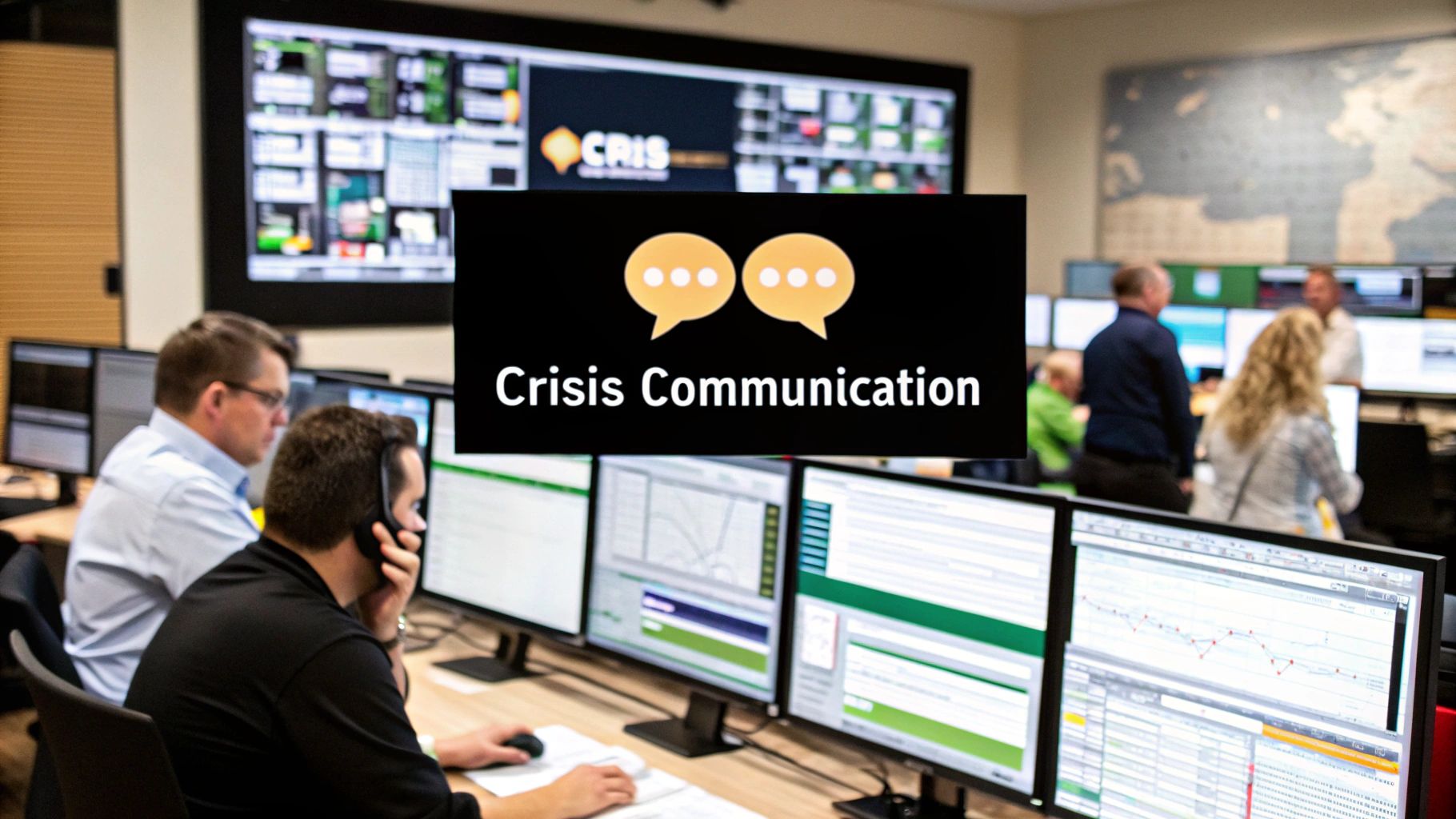
A crisis can emerge without warning, testing the limits of an organization's resilience, leadership, and public trust. The initial moments are often chaotic, but a well-prepared response can transform a potential catastrophe into a manageable situation. Effective crisis communication is not about spin or damage control; it's a strategic discipline focused on protecting stakeholders and preserving organizational integrity through transparent, timely, and empathetic engagement. Mastering these principles ensures you control the narrative rather than letting it control you.
This guide moves beyond generic advice to provide a detailed roadmap of actionable crisis communication best practices. We will break down the essential components of a robust strategy, from the critical first response to the long-term process of rebuilding your reputation. You will learn how to map stakeholders for targeted messaging, implement a multi-channel communication plan, and leverage technology for real-time monitoring.
Each best practice is designed to be a practical tool, complete with implementation details and specific examples. Whether you're refining an existing plan or building one from scratch, this listicle will equip you with the strategic insights needed to navigate any challenge with confidence and clarity, safeguarding your brand's future. Let's explore the frameworks that will help you lead effectively when it matters most.
1. Speed and Transparency in Initial Response
In a crisis, the digital age has eliminated the luxury of time. The first few hours are critical, and one of the most vital crisis communication best practices is to respond with a combination of speed and radical transparency. This approach involves immediately acknowledging the situation, even before all the facts are available, and being honest about what is known, what is unknown, and what steps are being taken to find answers.

This method, famously championed by Johnson & Johnson CEO James Burke during the 1982 Tylenol crisis, builds trust by demonstrating that the organization is taking the issue seriously and is not attempting to hide information. Waiting for perfect information can create a dangerous vacuum that will be filled with speculation and misinformation. By communicating quickly, you control the narrative and become the primary source of truth for stakeholders.
How to Implement Speed and Transparency
A swift, transparent response requires proactive preparation. Modern tools can greatly assist in this effort; for example, understanding the role of video conferencing in crisis communication can help teams coordinate and deliver messages quickly.
Here are actionable steps to take:
- Prepare Holding Statements: Create pre-approved message templates for various potential crisis scenarios (e.g., data breach, product recall, accident). These templates should allow you to quickly fill in specific details and release a statement within the first hour.
- Establish a "Golden Hour" Approval Chain: Design a streamlined, 24/7 approval process that includes key legal, executive, and communications personnel. This ensures that a response is not delayed by typical business-hour bureaucracy.
- Use the "What We Know/What We Don't Know" Framework: Structure your initial communication to clearly delineate confirmed facts from ongoing investigations. This manages expectations and establishes your commitment to providing updates as new information emerges. For instance, Buffer's transparent blog post during its 2013 security breach clearly outlined what had happened and what they were still investigating, earning them praise from their user base.
2. Stakeholder Mapping and Targeted Messaging
A one-size-fits-all message is ineffective during a crisis because different groups have vastly different concerns. A crucial aspect of crisis communication best practices is to systematically identify all stakeholders and craft targeted messages that resonate with their specific needs. This approach recognizes that employees, customers, investors, and regulators each require information framed in a way that directly addresses their unique relationship with the organization.

This strategy, rooted in stakeholder theory, moves beyond a simple public statement to a more nuanced, empathetic communication plan. For example, during its 2010 recall crisis, Toyota created distinct messaging for customers (focusing on safety and repair logistics), dealers (providing support and financial information), and regulators (demonstrating compliance and transparency). This segmentation prevents message dilution and shows each group that their concerns are heard and prioritized, which is essential for maintaining trust across the board.
How to Implement Stakeholder Mapping and Targeted Messaging
Effective stakeholder communication begins long before a crisis hits. It involves creating a detailed map of who needs to hear from you and what they need to know. Remember, your internal teams are a primary stakeholder group; developing robust internal communication strategies is the first step to ensuring a unified external voice.
Here are actionable steps to take:
- Create Stakeholder Maps in Advance: Proactively identify and categorize all potential stakeholders, from primary groups like employees and customers to secondary ones like community groups and media. Prioritize them based on their level of influence and impact.
- Develop Message Matrices: Build a framework that outlines core crisis messages and then customizes key points, tone, and calls-to-action for each priority stakeholder group. This ensures consistency in facts while allowing for tailored delivery.
- Establish Direct Communication Channels: Don't rely solely on mass media. Identify the best channels to reach each group, such as an employee intranet, a dedicated customer support line, an investor relations portal, or direct briefings for regulators.
- Assign Stakeholder "Owners": Designate specific members of your crisis team to be responsible for communicating with and gathering feedback from key stakeholder groups. This creates clear lines of responsibility and a direct feedback loop.
3. Social Media Monitoring and Rapid Response
In the digital age, social media is often the epicenter where a crisis ignites and spreads. Therefore, one of the most critical crisis communication best practices is the continuous monitoring of these platforms coupled with a swift response protocol. This involves actively listening to conversations, tracking brand mentions and sentiment, and being prepared to engage immediately to correct misinformation, address concerns, and manage the evolving online narrative.

Neglecting the social media landscape during a crisis is a modern-day cardinal sin. A single negative tweet or viral post can escalate into a full-blown reputational disaster if left unaddressed. As demonstrated by KFC's witty and self-aware "FCK" campaign during its 2018 UK chicken shortage, a proactive and well-executed social media response can not only mitigate damage but also generate goodwill and reinforce brand personality.
How to Implement Social Media Monitoring and Response
A robust social media response strategy is built on a foundation of technology, training, and clear protocols. It empowers your team to act decisively rather than reactively when the pressure is on.
Here are actionable steps to take:
- Deploy Social Listening Tools: Invest in and actively use platforms like Brandwatch, Sprout Social, or Hootsuite. Configure these tools to monitor brand names, key executive names, relevant hashtags, and industry-specific keywords to catch potential issues before they gain momentum.
- Establish Triage and Escalation Protocols: Not every negative mention is a crisis. Develop a clear flowchart that helps your social media team identify the severity of an issue and know when to respond, when to monitor, and when to escalate to the core crisis team.
- Train Your Frontline Responders: Your social media managers are your digital first responders. Ensure they are thoroughly trained in crisis communication protocols, brand voice, and de-escalation techniques. Provide them with pre-approved messaging and clear guidelines on public versus private responses.
- Create a "Dark Site" or Post: Prepare a hidden, unpublished page on your website or a draft social media post containing a holding statement. This allows you to instantly direct people to a central source of official information once the crisis is confirmed, helping to centralize communication and control the narrative.
4. Empathy-Driven Messaging and Authentic Leadership
Beyond the logistical mechanics of a response, one of the most powerful crisis communication best practices involves leading with genuine empathy. This means centering all communication on the human impact of the crisis. Authentic leadership moves beyond sterile corporate statements, with leaders personally stepping forward to take responsibility, express sincere concern, and connect with affected stakeholders on a human level.

In a crisis, people look for reassurance and humanity, not just information. When a leader communicates with authenticity, it cuts through the noise and helps rebuild trust. For example, Jacinda Ardern's response to the Christchurch shooting was defined by her immediate, compassionate, and decisive actions, which were praised globally. This approach shows that the organization sees people, not just problems, and values its community's well-being above its bottom line.
How to Implement Empathy and Authenticity
Fostering an empathetic response culture requires intentional training and a commitment from the highest levels of leadership. It’s about building a foundation of trust before a crisis ever hits.
Here are actionable steps to take:
- Prioritize Human Impact: In all messaging, address the impact on people first. Before discussing business continuity or operational details, acknowledge the pain, inconvenience, or fear experienced by those affected.
- Train Leaders in Authentic Communication: Provide media and communication training for executives that focuses on active listening, expressing vulnerability, and avoiding defensive, jargon-filled language. Role-playing crisis scenarios can help them practice delivering difficult news with compassion.
- Match Words with Concrete Actions: Empathy without action is hollow. Pair empathetic statements with tangible steps your organization is taking to support victims, solve the problem, and prevent recurrence. This could include setting up support funds, offering free services, or making immediate operational changes.
- Avoid Overly Scripted Responses: While preparation is key, a leader reading a stiff, lawyer-approved script can come across as insincere. Encourage leaders to use key talking points but deliver the message in their own words to convey genuine emotion and conviction.
5. Pre-Crisis Planning and Scenario Preparation
The most effective crisis response is not improvised; it is rehearsed. One of the cornerstone crisis communication best practices is investing in comprehensive pre-crisis planning and scenario preparation. This proactive approach involves building a detailed crisis communication plan long before an emergency occurs, ensuring your team can act decisively and cohesively when under pressure. A well-crafted plan is a blueprint for survival, guiding actions rather than letting the crisis dictate them.
This methodology, championed by crisis management pioneers like Steven Fink, moves an organization from a reactive to a prepared state. By anticipating potential issues and developing clear protocols, companies can significantly reduce response times and minimize reputational damage. Airlines, for example, have established, drilled protocols for accident response, allowing them to communicate with compassion and authority. Similarly, Disney's extensive planning enables a consistent and effective response across its vast global operations.
How to Implement Pre-Crisis Planning
A robust crisis plan is a living document, not a binder that gathers dust on a shelf. It requires regular attention and testing to remain effective. An essential component of this planning involves preparing communications around critical public health issues, such as understanding how to approach communicating safety standards during a pandemic.
Here are actionable steps to build your plan:
- Conduct a Vulnerability Audit: Identify potential crises specific to your industry and organization, from data breaches and product recalls to natural disasters and leadership scandals. Rank them by likelihood and potential impact.
- Define Roles and Responsibilities: Designate a core crisis communication team with clearly defined roles. This includes spokespeople, media monitors, internal communication leads, and legal counsel, with backups for each position.
- Develop Scenario-Specific Protocols: For your highest-risk scenarios, create detailed response protocols. This should include pre-drafted holding statements, key messages, stakeholder contact lists, and step-by-step communication sequences.
- Run Regular Drills and Simulations: Test your plan annually through simulations or tabletop exercises. These drills reveal gaps, test the team’s readiness, and build the muscle memory needed for a real event. Document lessons learned to continuously refine your plan.
6. Multi-Channel Communication Strategy
In today's fragmented media landscape, relying on a single channel to disseminate critical information is a recipe for failure. A core component of modern crisis communication best practices is deploying a multi-channel strategy. This involves simultaneously using various platforms to ensure your message reaches all stakeholders where they are most likely to see it, from employees and customers to investors and the general public, while ensuring absolute consistency in messaging.
This integrated approach ensures maximum reach and reinforcement of key messages. For example, during major operational disruptions, Southwest Airlines effectively uses a comprehensive mix of channels, including direct emails to affected passengers, real-time updates on X (formerly Twitter), prominent alerts on its website, and statements to traditional media. This ensures that different audiences receive timely, relevant information through their preferred communication medium, minimizing confusion and demonstrating proactive management.
How to Implement a Multi-Channel Strategy
A successful multi-channel approach isn't just about posting everywhere; it requires coordination and adaptation. Each channel has its own nuances, and your strategy must account for them while maintaining a unified core message.
Here are actionable steps to take:
- Map Stakeholders to Channels: Before a crisis, identify your key stakeholder groups (e.g., employees, customers, investors, media) and determine the most effective channels to reach each one. Employees might rely on internal Slack channels, while customers follow your social media accounts.
- Prepare Channel-Specific Templates: While the core message must be consistent, its delivery should be tailored. Draft message templates adapted for different formats, such as a 280-character update for X, a detailed post for your company blog, and a formal statement for a press release.
- Establish a Central "Source of Truth": Designate a single internal hub, like a dedicated page on your intranet or a shared document, where all approved crisis messaging is stored. This prevents inconsistent or outdated information from being distributed across different channels.
- Utilize a Centralized Management Tool: Employ social media management platforms like Hootsuite or Sprout Social to schedule, post, and monitor communications across multiple channels from one dashboard. This streamlines the process and ensures message consistency and timing.
7. Continuous Monitoring and Adaptive Response
A crisis is not a static event; it is a fluid, evolving situation. Therefore, one of the most critical crisis communication best practices is to adopt a strategy of continuous monitoring and adaptive response. This involves actively listening to stakeholder feedback, tracking media coverage and social media sentiment in real time, and being agile enough to adjust your messaging and tactics as the situation develops.
This data-driven approach, influenced by agile methodologies, ensures that your communication remains relevant, effective, and resonant. It prevents your organization from appearing out of touch or tone-deaf. For example, during its 2020 security and privacy challenges, Zoom demonstrated an iterative response, regularly communicating updates and product changes based on user feedback and media reports, which helped rebuild trust over time. This adaptive model turns communication into a two-way dialogue rather than a one-way broadcast.
How to Implement Continuous Monitoring and Adaptation
An adaptive response is powered by real-time data and a willingness to pivot. For teams coordinating these rapid adjustments remotely, ensuring secure communication channels is paramount; you can find more information on best practices for video conferencing security to protect sensitive strategy discussions.
Here are actionable steps to take:
- Establish Feedback Loops: Create formal channels for customer service, sales, and social media teams to relay stakeholder concerns and questions directly to the crisis communication team. This provides a direct line to audience sentiment.
- Use Social Listening and Media Monitoring Tools: Employ analytics tools to track message reach, engagement, and sentiment across all channels. This quantitative data helps identify which messages are working and which need to be revised.
- Schedule Regular Strategy Reviews: During a prolonged crisis, hold daily or even twice-daily "stand-up" meetings with the crisis team to review the latest data, assess the effectiveness of current messaging, and make necessary adjustments.
- Be Prepared to Apologize and Pivot: If your initial response is not well-received or new facts emerge that change the context, be ready to issue a new statement, apologize if necessary, and clearly explain how your approach is changing.
8. Recovery and Reputation Rebuilding Focus
Effective crisis management doesn't end when the immediate threat subsides. One of the most forward-thinking crisis communication best practices involves shifting from reactive damage control to a proactive, long-term focus on recovery and reputation rebuilding. This strategic phase is about demonstrating sustained commitment to change, rebuilding trust, and learning from the incident to emerge as a stronger organization.
This approach goes beyond a simple apology; it involves concrete actions and transparent reporting over an extended period. For example, after its massive 2017 data breach, Equifax initiated a multi-year effort that included significant investments in cybersecurity and a public commitment to transparency. Similarly, Domino's Pizza completely transformed its brand by openly addressing its food quality crisis, changing its core recipe, and building a marketing campaign around its commitment to improvement.
How to Implement a Recovery and Reputation Rebuilding Focus
A successful recovery phase is planned and executed with the same rigor as the initial crisis response. Beyond immediate response, a critical part of the recovery phase is implementing effective strategies to improve brand image that may have been impacted by the crisis.
Here are actionable steps to guide your long-term efforts:
- Develop Tangible Recovery Metrics: Create specific, measurable goals that stakeholders can track. These might include third-party security audit scores, customer satisfaction improvements, or a reduction in complaints.
- Establish a Public Progress Roadmap: Publish a timeline or roadmap detailing the steps you will take to rectify the issues. Provide regular updates, even if progress is slow, to maintain transparency and show continued accountability.
- Invest in Visible Commitments: Make substantial, visible investments in the areas that failed. Tylenol's introduction of industry-first tamper-resistant packaging after its 1982 crisis was a powerful, tangible demonstration of its commitment to consumer safety.
- Use Recovery to Strengthen Relationships: Actively engage with stakeholders through town halls, advisory councils, and direct outreach. Use this period to listen to concerns and incorporate feedback into your recovery plan, turning critics into advocates.
Crisis Communication Best Practices Comparison
| Approach | Implementation Complexity | Resource Requirements | Expected Outcomes | Ideal Use Cases | Key Advantages |
|---|---|---|---|---|---|
| Speed and Transparency in Initial Response | Medium | High (trained spokespeople, 24/7 availability) | Rapid acknowledgment, trust building, misinformation reduction | Early crisis stages requiring quick disclosure | Builds credibility, controls narrative, prevents speculation |
| Stakeholder Mapping and Targeted Messaging | High | High (analysis, multiple messaging streams) | Effective, relevant communication, audience coverage | Complex crises affecting diverse groups | Prevents overlooked audiences, increases message relevance |
| Social Media Monitoring and Rapid Response | High | Very high (24/7 monitoring team, tools) | Early detection, misinformation correction, real-time engagement | Crises with strong social media presence | Enables direct engagement, prevents viral spread |
| Empathy-Driven Messaging and Authentic Leadership | Medium | Medium (leadership training, authentic messaging) | Emotional connection, trust, positive reputation | Crises needing humanized communication | Builds trust, humanizes organization, speeds forgiveness |
| Pre-Crisis Planning and Scenario Preparation | High | High (planning, training, documentation) | Faster, consistent response, reduced decision paralysis | Any organization aiming for readiness | Provides structure, consistent messaging, confidence |
| Multi-Channel Communication Strategy | High | High (coordination across channels) | Maximized reach, message consistency across mediums | Broad audience with diverse communication preferences | Ensures redundancy, optimizes message per channel |
| Continuous Monitoring and Adaptive Response | High | High (monitoring tools, analysis, flexible strategy) | Message optimization, stakeholder responsiveness | Extended crises requiring message adjustments | Enables course correction, data-driven improvements |
| Recovery and Reputation Rebuilding Focus | High | High (long-term commitment, engagement) | Sustained reputation recovery, improved stakeholder relations | Post-crisis phase focusing on rebuilding | Demonstrates accountability, transforms crisis to advantage |
Final Thoughts
Navigating a crisis is a defining moment for any organization, a true test of leadership, resilience, and integrity. Throughout this guide, we've explored the essential pillars of effective crisis response, moving beyond mere damage control to a more strategic, human-centric approach. From the initial, critical hours demanding speed and transparency to the long-term commitment of reputation rebuilding, the thread connecting every successful strategy is a deep-seated commitment to preparedness and authenticity.
The journey through a crisis is not linear; it's a dynamic, evolving landscape. The principles of continuous monitoring and adaptive response are not just best practices; they are necessities in a world where information travels at the speed of a click. Your ability to listen to stakeholder feedback, adjust your messaging, and pivot your strategy in real-time will ultimately separate a temporary setback from a lasting brand disaster. Remember, your audience doesn't expect perfection, but they do demand honesty and empathy.
From Theory to Action: Your Next Steps
Mastering the art of crisis communication is an ongoing process, not a one-time project. The true value of these crisis communication best practices lies in their implementation long before a crisis ever strikes. To transform these concepts from a checklist into an ingrained part of your organizational DNA, consider these immediate, actionable steps:
- Audit Your Current Plan: Use the eight best practices we’ve discussed as a benchmark. Where are the gaps in your existing crisis communication plan? Is your stakeholder map current? Are your pre-approved messaging templates flexible enough for modern crises?
- Conduct a Tabletop Exercise: Move beyond theoretical planning. Gather your crisis response team and simulate a realistic scenario. This exercise will reveal weaknesses in your command chain, technology, and internal communication protocols that a simple plan review would miss.
- Invest in Your Team: Equip your spokespeople and communication teams with ongoing media training. Ensure they are comfortable delivering empathy-driven messaging with authenticity, even under intense pressure.
Ultimately, effective crisis communication is about building and protecting trust. When handled with skill and sincerity, a crisis can become an unexpected opportunity to reinforce your organization's values, strengthen stakeholder relationships, and emerge with a reputation that is not just repaired, but enhanced. The work you do today in preparation is the most valuable investment you can make in your organization’s future.
Ready to ensure your crisis response team can connect and collaborate securely, no matter where they are? AONMeetings provides an ultra-secure, reliable virtual meeting platform perfect for managing sensitive communications during a crisis. Visit AONMeetings to see how you can build a more resilient communication infrastructure today.